Open-source AI is no longer a niche movement — it has rapidly become a foundational force shaping how artificial intelligence is built, deployed, and adopted around the world. From transparent model weights to community-driven innovation, open-source approaches are lowering barriers, accelerating discovery, and anchoring ecosystems that are more flexible, auditable, and sovereign.
A newly published report, The Open-Source AI Landscape, developed under the StepUp StartUps project, maps this emerging space and situates Europe’s position within it. The study highlights how open-source AI can serve as a strategic lever for European competitiveness, while also flagging structural gaps that must be addressed if the continent is to convert its scientific strength into industrial and economic leadership.
DEEP Ecosystems is proud to be a key partner in the StepUp StartUps project, a European Commission-funded initiative aimed at reshaping Europe’s startup ecosystem. Together with Barrabes, Leibniz IRS, Startup Europe Regions Network (SERN), and EU Startups, DEEP is spearheading a two-year journey to develop data-driven insights, conduct research, and organize events to inform policy transformation.
The primary objective of StepUp StartUps is to provide a comprehensive understanding of the functioning of national and local startup and scaleup ecosystems across the EU-27 and EFTA countries. This knowledge will inform the development of data-driven policy reports on key issues and challenges facing Europe’s startup ecosystem.
The rise of open-source models
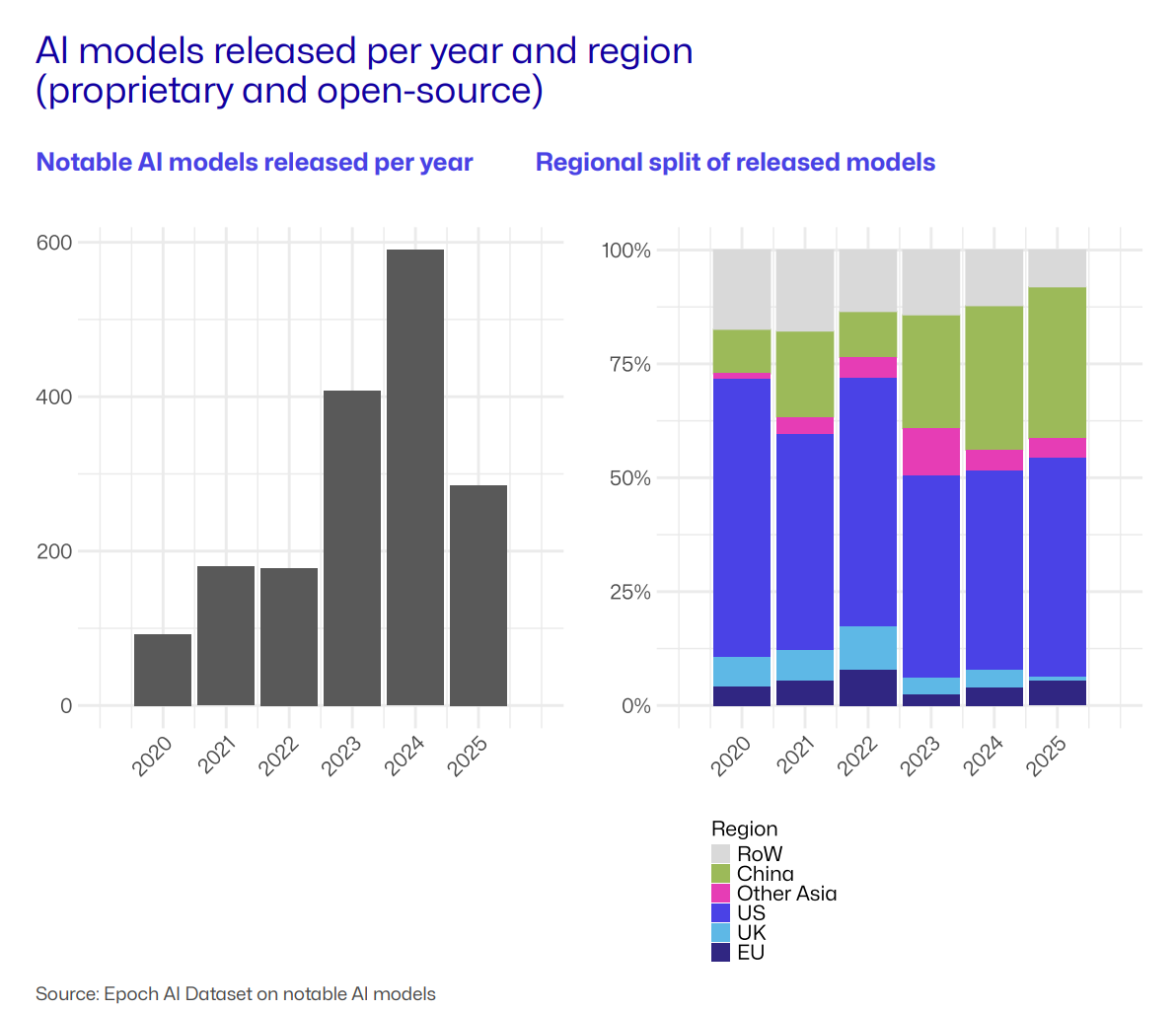
The global open-source AI ecosystem has expanded dramatically in recent years. Open-weight models such as Llama, Mistral, Qwen, Gemma, OLMo, and DeepSeek have proliferated, enabling innovation across research, startups, and industry. These models are not only freely accessible; they empower experimentation, reuse, and adaptation in ways that closed systems cannot match.
This trend has profound implications: it democratizes access to powerful AI capabilities, supports transparency and auditability, and helps organizations avoid vendor lock-in — a particular concern for highly regulated sectors.
Why open-source matters for Europe
Open-source AI aligns with core European values and strategic priorities:
- Transparency and accountability: Open-weight models promote interpretability and trust, key for regulated environments such as healthcare and finance.
- Sovereignty and data governance: With open access to models, European organisations can host and adapt systems under their own compliance frameworks.
- Inclusion and accessibility: Lowering entry barriers supports broader participation from startups and SMEs, supporting wider digitalisation goals.
Serving not only as a technical approach but as a sovereignty strategy, open-source AI can help the EU reduce dependence on external model providers and build capacities tailored to European needs.
What needs to happen next
The report outlines actionable recommendations to help Europe strengthen its role in open-source AI:
- Support SME adoption pathways that lower cost and complexity barriers for small and medium-sized enterprises.
- Expand access to shared compute through EuroHPC and AI Factories for startups, SMEs, and research teams.
- Mobilize targeted investment — including dedicated funding instruments for open-source AI innovation.
- Leverage industrial demand by aligning open-source efforts with European strengths in manufacturing, health, mobility, and other regulated domains.
With coordinated action and a shared vision, Europe has the potential to become an even more attractive and dynamic environment for entrepreneurs.
Join DEEP Network
We invite you to participate in discussions that will shape the future of EU innovation. By joining our network, you can contribute to the development of supportive policies and initiatives for startups and innovators across Europe. DEEP is a group of industry leaders who inspire us to explore new trends and policy needs. Join our network to collaborate on data, exchange insights, connect with key players, and share your own perspectives.
The project is funded by the tender of the European Commission on “European Start-ups 2.0 – Taking Europe’s start-up economy to the next level through data-driven insights, research and events” with number CNECT/2022/OP/0133. Views and opinions expressed are however those of the authors only and do not necessarily reflect those of the European Union, European Commission or the Council of Europe. Neither the European Union nor the granting authority can be held responsible for them.