Switch Dataset:
Startup News
We are collecting the most relevant tech news and provide you with a handy archive. Use the search to find mentions of your city, accelerator or favorite startup in the last 1,000 news items. If you’d like to do a more thorough search, please contact us for help.
Search for any keyword to filter the database with >10,000 news articles
Filter
Filter search
Results
| id | date | title | slug | Date | link | content | created_at | feed_id |
|---|---|---|---|---|---|---|---|---|
| 58,901 | 24/10/2026 10:59 AM | UK funds £100m AI biosecurity lab with OpenAI and Anthropic | uk-funds-pound100m-ai-biosecurity-lab-with-openai-and-anthropic | 24/10/2026 |  The UK government will put £100m into a new AI Biosecurity Lab, which will use advanced AI to spot and respond to biological threats. OpenAI and Anthropic will add up to £200m between them, the Cabinet Office said on Saturday. The government called the lab the world’s first dedicated AI biosecurity organisation. It will start with two […] This story continues at The Next Web |
24/10/2026 11:10 AM | 3 | |
| 58,902 | 24/10/2026 10:30 AM | OpenAI cuts live internet from all frontier model training | openai-cuts-live-internet-from-all-frontier-model-training | 24/10/2026 |  OpenAI has cut live web access from all training of its most advanced AI models. The models now browse and search a cached copy of the web instead, the company wrote in a blog post on Friday. “Based on the current state of alignment research, monitoring systems, and the security of internet infrastructure,” OpenAI wrote, it believes […] This story continues at The Next Web |
24/10/2026 11:10 AM | 3 | |
| 58,903 | 24/10/2026 10:22 AM | Malaysia may extend Waze ban to the public, Anwar says | malaysia-may-extend-waze-ban-to-the-public-anwar-says | 24/10/2026 |  Malaysia could extend its ban on the Waze maps app from civil servants to the whole country, Prime Minister Anwar Ibrahim said on Friday. A full ban would come only after officials look at other apps, he said. Anwar spoke to reporters in Kuala Lumpur, according to Bernama, the national news agency. Officials will check if […] This story continues at The Next Web |
24/10/2026 11:10 AM | 3 | |
| 58,904 | 24/10/2026 10:11 AM | GMO asks Japan to use new cyber defence powers after hack | gmo-asks-japan-to-use-new-cyber-defence-powers-after-hack | 24/10/2026 |  GMO Internet Group has asked Japan’s government to use its new active cyber defence powers against hackers who breached one of its services. The company made the request on Saturday, after the attackers demanded money. In a stock exchange filing on Saturday, GMO said it wants state agencies to trace, block, and neutralise the attackers’ infrastructure. It […] This story continues at The Next Web |
24/10/2026 11:10 AM | 3 | |
| 58,900 | 24/10/2026 09:27 AM | What makes a fax HIPAA compliant in the AI era | what-makes-a-fax-hipaa-compliant-in-the-ai-era | 24/10/2026 |  HHS has never told healthcare to stop faxing. Its guidance says the Privacy Rule permits physicians to disclose PHI to another provider by fax for treatment, as long as reasonable and appropriate safeguards are in place. Take two identical referral forms sent the same morning. One moves through an encrypted, logged channel covered by a […] This story continues at The Next Web |
24/10/2026 10:10 AM | 3 | |
| 58,899 | 23/10/2026 11:07 PM | Startups don’t need to go viral to win customers | startups-dont-need-to-go-viral-to-win-customers | 23/10/2026 | 23/10/2026 11:10 PM | 7 | ||
| 58,898 | 23/10/2026 08:57 PM | VCs, Superhuman Mail founder share red flags about product market fit | vcs-superhuman-mail-founder-share-red-flags-about-product-market-fit | 23/10/2026 | 23/10/2026 09:10 PM | 7 | ||
| 58,896 | 23/10/2026 08:03 PM | TechCrunch Founder Summit 2026 roundtables: Go deeper on the challenges founders are solving right now | techcrunch-founder-summit-2026-roundtables-go-deeper-on-the-challenges-founders-are-solving-right-now | 23/10/2026 | 23/10/2026 08:10 PM | 7 | ||
| 58,897 | 23/10/2026 07:25 PM | Carta and NewView partner, hoping to entice more startups to let employees sell shares early | carta-and-newview-partner-hoping-to-entice-more-startups-to-let-employees-sell-shares-early | 23/10/2026 | 23/10/2026 08:10 PM | 7 | ||
| 58,895 | 23/10/2026 07:06 PM | From Toast to Bessemer: Who founders will hear from at TechCrunch Founder Summit 2026 | from-toast-to-bessemer-who-founders-will-hear-from-at-techcrunch-founder-summit-2026 | 23/10/2026 | 23/10/2026 07:10 PM | 7 | ||
| 58,893 | 23/10/2026 06:49 PM | Hindsight puts up to $1M behind its AI content moderation as Google shuts down Perspective API | hindsight-puts-up-to-dollar1m-behind-its-ai-content-moderation-as-google-shuts-down-perspective-api | 23/10/2026 |  Starting January 1, any moderation pipeline calling Perspective will fail. Google’s Jigsaw unit shuts the service down on December 31, ending one of the most widely used tools for scoring online comments for toxicity. For platforms, publishers, marketplaces, and communities built on it, the next few months bring an unwelcome decision. Find a replacement, and […] This story continues at The Next Web |
23/10/2026 07:10 PM | 3 | |
| 58,894 | 23/10/2026 06:19 PM | Moonshot releases Kimi K3.1 Pro and says it cut its hacking skills | moonshot-releases-kimi-k31-pro-and-says-it-cut-its-hacking-skills | 23/10/2026 |  Moonshot has released Kimi K3.1 Pro, an upgraded version of its open-weight Kimi K3, with full weights due by 4 November. It says the model nearly matches Claude Opus 5.5 on a coding test. Moonshot also says it removed hacking-related training data to limit misuse of the open release. Chinese AI lab Moonshot has released […] This story continues at The Next Web |
23/10/2026 07:10 PM | 3 | |
| 58,892 | 23/10/2026 05:42 PM | AI chipmaker Cambricon’s sales miss points to tight chip supply in China | ai-chipmaker-cambricons-sales-miss-points-to-tight-chip-supply-in-china | 23/10/2026 |  Cambricon’s revenue doubled to 3.53B yuan in the third quarter, well short of the 6.26B analysts expected, Bloomberg reported. Profit rose 148%, and the company kept its 2026 target. Chinese AI chipmakers face shortages of high-bandwidth memory and limited access to advanced manufacturing. Cambricon, one of China’s main makers of AI chips, missed sales forecasts […] This story continues at The Next Web |
23/10/2026 06:10 PM | 3 | |
| 58,889 | 23/10/2026 05:08 PM | Wayve, Stellantis and Nvidia team up with France on self-driving cars | wayve-stellantis-and-nvidia-team-up-with-france-on-self-driving-cars | 23/10/2026 |  Wayve, Stellantis and Nvidia announced a collaboration with the French government to deploy self-driving vehicles in France and across the EU. Stellantis supplies L4-ready platforms, Wayve its AI Driver and Nvidia its Hyperion system. Uber is also involved, a French trade paper reported. No launch date was given. Wayve, Stellantis and Nvidia will work with […] This story continues at The Next Web |
23/10/2026 05:10 PM | 3 | |
| 58,891 | 23/10/2026 04:26 PM | Agent cloud startup Daytona hits $1B valuation backed by FirstMark and a who’s who of angels | agent-cloud-startup-daytona-hits-dollar1b-valuation-backed-by-firstmark-and-a-whos-who-of-angels | 23/10/2026 | 23/10/2026 05:10 PM | 7 | ||
| 58,890 | 23/10/2026 04:12 PM | Meta delays its website-crawling terms after a publisher backlash | meta-delays-its-website-crawling-terms-after-a-publisher-backlash | 23/10/2026 |  Meta has pushed the start of its new business terms to 20 November from 30 October, Reuters reported. Publishers say the terms let Meta crawl their websites for its products. The delay came a day after the News/Media Alliance demanded the terms be withdrawn. Meta has pushed back new business terms that publishers say would […] This story continues at The Next Web |
23/10/2026 05:10 PM | 3 | |
| 58,885 | 23/10/2026 03:49 PM | Oracle pledges $1B over four years to partners that sell its AI tools | oracle-pledges-dollar1b-over-four-years-to-partners-that-sell-its-ai-tools | 23/10/2026 |  Oracle announced a $1B, four-year commitment to its partner ecosystem at AI World in Las Vegas, covering training, test and demo environments, cloud migration funding and Marketplace sales. It also changed Marketplace rules. The pledge comes as Oracle cuts costs to fund its AI data centres. Oracle will spend $1B over the next four years […] This story continues at The Next Web |
23/10/2026 04:10 PM | 3 | |
| 58,886 | 23/10/2026 03:36 PM | Nscale sued in Norway over a data centre engineer’s dismissal | nscale-sued-in-norway-over-a-data-centre-engineers-dismissal | 23/10/2026 |  An engineer at Nscale’s Stavanger data centre has sued the AI cloud firm and subcontractor CloudBrothers, Bloomberg reported. He claims Nscale directed his work like an employer and that he was fired after raising pay concerns. The case comes as Nscale prepares a contested IPO. An engineer at Nscale’s data centre in Stavanger, Norway, has […] This story continues at The Next Web |
23/10/2026 04:10 PM | 3 | |
| 58,887 | 23/10/2026 03:35 PM | Weekly funding round-up! All of the European startup funding rounds we tracked this week (Oct. 19 – Oct. 23) | weekly-funding-round-up-all-of-the-european-startup-funding-rounds-we-tracked-this-week-oct-19-oct-23 | 23/10/2026 | This article is visible for CLUB members only. If you are already a member but don’t see the content of this article, please login here. If you’re not a CLUB member yet, but you’d like to read members-only content like this one, have unrestricted access to the site and benefit from many additional perks, you can sign up here. The post Weekly funding round-up! All of the European startup funding rounds we tracked this week (Oct. 19 – Oct. 23) appeared first on EU-Startups. |
23/10/2026 04:10 PM | 6 | |
| 58,888 | 23/10/2026 03:05 PM | ICEYE strengthens Ukraine’s satellite communications ambitions while expanding wildfire monitoring capabilities | iceye-strengthens-ukraines-satellite-communications-ambitions-while-expanding-wildfire-monitoring-capabilities | 23/10/2026 | Finnish SpaceTech unicorn ICEYE has announced two new partnerships aimed at expanding its satellite intelligence capabilities across defence and environmental monitoring. The company signed a Letter of Intent alongside Nokia and Ukraine’s Ministry of Defence to explore sovereign satellite communications, while also announcing a collaboration with German startup OroraTech to develop an integrated wildfire intelligence solution. This follows a period of notable growth for the Espoo-based scale-up. In June 2026, ICEYE secured €450 million in primary Series F funding, valuing the company at more than €10 billion, with a further €300 million revolving credit facility secured in May. This funding activity can be placed alongside adjacent 2026 European SpaceTech funding announcements, including €51 million for Luxembourg and US-based Hydrosat to expand thermal satellite intelligence, €34 million for the UK’s SatVu to scale its thermal observation constellation, and €61 million for Switzerland’s SWISSto12 to develop satellite and communications infrastructure. In Finland, Helsinki-based Kelluu also raised €15 million to expand its autonomous aerial intelligence capabilities. Together with funding for France’s UNIVITY (€27 million) and Germany’s AIRMO (€5 million), these 2026 rounds account for approximately €643 million in the general SpaceTech sector, including ICEYE’s primary financing. Founded in 2014 by Rafal Modrzewski and Pekka Laurila, ICEYE specialises in synthetic aperture radar (SAR) satellite technology, providing Earth observation data and intelligence to governments, defence organisations, insurers and emergency management agencies. The company originated from research at Aalto University and launched its first SAR satellite in 2018, becoming an early pioneer in miniaturised radar satellites. The first of the two announcements centres on a Letter of Intent signed by ICEYE, Nokia and Ukraine’s Ministry of Defence to explore cooperation on secure satellite communications. Announced during the Finnish Prime Minister’s visit to Ukraine, the initiative aims to strengthen the country’s defence capabilities by developing communications infrastructure that Ukraine can independently own and control. The agreement builds on an earlier partnership between ICEYE and Nokia, announced on October 1st 2026, to develop secure, high-performance broadband communications systems using low Earth orbit (LEO) satellites. Designed for governments, these systems would support defence, border security, emergency services and disaster response, while giving participating countries control over their satellites, ground infrastructure and terminals. Rafal Modrzewski, CEO and Co-founder of ICEYE, said: “Ukraine needs secure, sovereign and high-performance satellite communications systems that it controls. We have a proven track record of delivering sovereign missions at speed to help build that capability. ICEYE has proudly supported Ukraine since 2022, and we remain committed to continuing that support today.” ICEYE has supported Ukraine with satellite intelligence since 2022, making the proposed communications collaboration a potential extension of an existing relationship. The latest agreement remains exploratory, with no deployment timetable or financial commitments disclosed. Alongside its defence-related developments, ICEYE has also partnered with Munich-based OroraTech to expand its wildfire intelligence services. The collaboration will combine OroraTech’s thermal satellite data with ICEYE’s SAR observations, creating a platform intended to help organisations monitor wildfires from their earliest stages through to damage assessment and recovery. Founded in 2018 by Thomas Grübler, Rupert Amann, Florian Mauracher and Björn Stoffers, OroraTech develops space-based thermal intelligence for wildfire detection and monitoring. The startup has expanded its satellite network and provides information to governments and organisations managing wildfire risks worldwide. As per our coverage, OroraTech secured a €37 million Series B extension in 2025. Until now, ICEYE’s wildfire intelligence capabilities have primarily focused on assessing building-level damage during active fires. By incorporating OroraTech’s thermal observations, the company aims to extend its services to include identifying initial hotspots, tracking fire progression and assessing threats to communities and critical infrastructure. The combination brings together two complementary technologies. OroraTech’s thermal satellites can detect heat anomalies and monitor active fires, while ICEYE’s SAR satellites can capture observations through clouds, smoke and darkness, helping assess damage to buildings and infrastructure even while a wildfire is ongoing. Dr. Ignacio Zuleta, Chief Technology and Product Officer at OroraTech, commented: “Our thermal satellite intelligence provides that critical visibility from the earliest stages of an event, detecting hotspots and tracking fire activity as it develops. By bringing that intelligence together with ICEYE’s SAR capabilities, we can help decision-makers maintain a more continuous understanding of a wildfire, from first detection through its impact on communities, infrastructure and the surrounding environment.” The integrated solution targets several sectors, including government emergency management, utilities and insurance. Emergency services could use the intelligence to inform evacuations and coordinate firefighting resources, while energy providers could monitor threats to electricity networks and other infrastructure. Insurers could also use the data to identify exposed properties, assess damage and prioritise claims. According to ICEYE, the technology could help accelerate disaster response by providing more timely information on wildfire progression and its consequences. The company says its integrated approach could support damage assessments for disaster declarations within 24 hours, compared with processes that can otherwise take weeks. Taken together, the two announcements are one of many examples of how ICEYE is expanding its satellite capabilities beyond Earth observation imagery into a broader range of intelligence and communications services. The post ICEYE strengthens Ukraine’s satellite communications ambitions while expanding wildfire monitoring capabilities appeared first on EU-Startups. |
23/10/2026 04:10 PM | 6 | |
| 58,884 | 23/10/2026 03:00 PM | How Many Billions Would It Take to Hold Meta Accountable? | how-many-billions-would-it-take-to-hold-meta-accountable | 23/10/2026 | Meta got hit this week with its biggest fine yet, the latest in a mounting pile of court-ordered payments. | 23/10/2026 03:10 PM | 4 | |
| 58,880 | 23/10/2026 02:53 PM | Legora’s valuation leaps to $8.8B, Europe's tech funding rebounds, and solving the problem of brain fog | legoras-valuation-leaps-to-dollar88b-europes-tech-funding-rebounds-and-solving-the-problem-of-brain-fog | 23/10/2026 | This week, we tracked more than 65 tech funding deals worth over €1.5 billion and 4 exits, M&A transactions, rumours, and related news stories across Europe.
We also released our Q3 report offering data driven insights into the last three months. The report is free for all Tech.eu readers. Want to stay in the know? If email is more your thing, you can always subscribe to our newsletter and receive a more robust version of this round-up delivered to your inbox. ❗ Want to explore the data in more detail? The free, open-access Tech.eu Funding Explorer offers deeper insights into funding rounds, investor activity, company profiles and market trends. Either way, let's get you up to speed. ? Notable and big funding rounds?? Legora’s valuation leaps to $8.8B as it raises $550M ?? Scaleup Europe Fund leads £250M funding round in Pigment ?? iwoca secured a credit line of €185M ?? Blackwall hits $2.2B valuation with $100M Series C just weeks after joining Estonia's unicorn club ???? Noteworthy acquisitions and mergers?? Omnidocs acquires WoodWing and becomes one of Europe's largest players in document management ?? Workflex is acquiring rhome ?? Standard Chartered to acquire Zodia Custody ? Interesting moves from investors? Nvidia invests in four german startups as part of 10bn european investment pledge ? German VCs call for €15B annual funding boost to build the next generation of tech giants ? EIT launches €40M funding call to help bring university deep tech research to market ? The FSE Group launches £70M+ London growth fund to back underserved scaleups ? Seaya raises €600M for new growth fund to back Europe's next global tech leaders ?️ In other (important) news?? Europe's tech funding rebounds to €27.8B, fuelled by billion-euro mega-rounds ? Former Google DeepMind top researcher launches London “compute-efficient” AI company ?️ Silent sailing, noisy generators: Hydrogen startups PowerUP and H2Boat tackle yachting's diesel problem ? Recommended reads and listens?? Novus secures eight figure funding to take its electric lightbike from Germany to California ?? TechWolf co-founder: Ghent flywheel "super important” ? Brain fog, missed diagnoses, and lost careers: The menopause gap Cerebella wants to close ⚡ Stealing EV cables is big business. This company wants to make it too much effort to bother ? European tech startups to watch?? Ganiga secures €2.5M to expand its AI-powered food waste technology ?? Arke Telekom lands €1M from ACT Venture Partners to advance drone communications ?? Go Eve secures £750,000 to advance its DockChain EV charging technology ?? Jenz lands €540,000 in pre-seed funding and received €92,000 startup grant from Innovation Norway ?? Körber takes stake in bootstrapped German robotics startup NAiSE |
23/10/2026 03:10 PM | 1 | |
| 58,882 | 23/10/2026 02:33 PM | Bose buys Skullcandy, the cheaper headphone brand already using its sound | bose-buys-skullcandy-the-cheaper-headphone-brand-already-using-its-sound | 23/10/2026 |  Bose bought Skullcandy on Wednesday, the company said in a statement. The seller was a fund managed by Mill Road Capital Management, a private investment firm in Connecticut. Skullcandy joins McIntosh and Sonus faber in Bose’s group of audio brands. Skullcandy will sit inside Bose’s Premium Consumer Audio business. It keeps its base in Park […] This story continues at The Next Web |
23/10/2026 03:10 PM | 3 | |
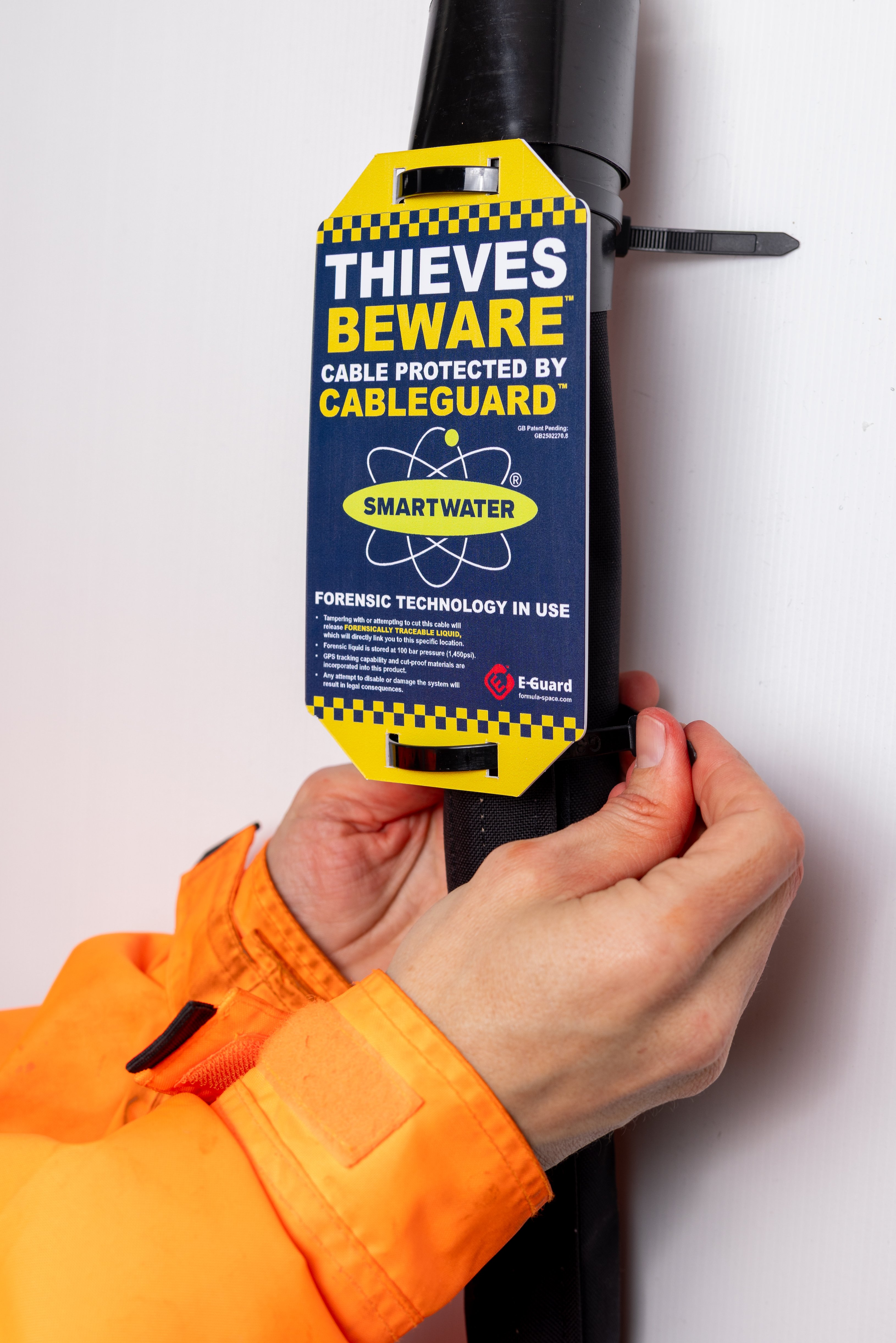
| 58,881 | 23/10/2026 02:20 PM | Stealing EV cables is big business. This company wants to make it too much effort to bother | stealing-ev-cables-is-big-business-this-company-wants-to-make-it-too-much-effort-to-bother | 23/10/2026 | A few years ago, a couple arrived at an EV charging site on a mobility scooter in broad daylight, armed with a hacksaw. They proceeded to steal the charging cables, apparently unconcerned about being filmed from a passing bus. But what might sound like an almost comical example of opportunistic theft has evolved into something far more serious: organised criminal gangs targeting EV charging infrastructure across Europe, sometimes hitting multiple locations in a single night. According to Vern Pollard, cable theft response expert and director at Formula Space, a Canterbury company developing technology to protect EV charging cables from theft, the days of thieves turning up with basic hand tools are increasingly giving way to coordinated operations. "Perpetrators work in teams, arrive in stolen vehicles and wear balaclavas or masks to avoid identification. They use high-powered cutting tools that complete the cut quickly, and a single group can hit 5 or more sites in one night," said Pollard. Police contacts have told Formula Space that these gangs have established routes for moving stolen copper, with some also involved in theft from telecommunications networks. And the scale of the problem is becoming difficult to ignore. UK charge point operator (CPO) InstaVolt reported losing approximately 260 cables from 130 chargers in 2025. German CPO EnBW has experienced theft at 120 locations since the beginning of 2025, with total damage costs exceeding €1 million. In France, roughly 10 per cent of the national charging network has reportedly been affected, while in Spain, thieves have been apprehended after stealing 34 kilometres of copper charging cables. Making copper theft more trouble than it's worthFormula Space is tackling the problem with CableGuard, a protective sleeve fitted around EV charging cables to make them harder and slower to cut, while maintaining the flexibility drivers need to connect their vehicles. The company has now launched a V4 cut protection option, developed specifically to counter increasingly aggressive attacks involving angle grinders and other power tools.
Rather than making cables impossible to steal, the technology aims to increase the time, equipment, and effort required to remove them, making an attack more conspicuous and increasing the risk of being caught. The new sleeve is engineered to reduce the effectiveness of cutting tools during an attack, potentially turning a theft that once took seconds into a prolonged operation. It can be retrofitted to existing chargers in approximately 20 minutes and has been verified by charger manufacturers including Nidec, Wallbox, and Kempower. Pollard explained:
CableGuard is already installed across thousands of sites globally, according to the company, and has been adopted by operators including TotalEnergies, Atlante, InstaVolt, Allego, E.ON, RAW Charging, and Sainsbury's Smart Charge. Where does all the stolen copper go? The obvious question is who is buying all this copper, particularly when European countries have introduced tighter regulations governing scra s. In Belgium, for example, dealers buying scrap metal from private individuals must identify and register the seller. Cash payments for used copper cable were banned in 2013, with the restriction extended to all scrap metal in March 2024. But according to Pollard, organised groups have adapted. "Cable is stripped and chopped, and in some cases melted into ingots, which removes any markings that could trace it back to the site it came from," he explained. Once processed, the copper can be mixed into larger consignments of legitimate scrap and sold across borders, making it harder to establish its origins. He says a minority of scrap dealers still accept material without proper checks, providing an outlet for criminal groups despite stricter regulations. Why some charging sites are easy targetsNot all charging locations are equally vulnerable. According to Pollard, thieves are less concerned with the manufacturer of the charger than the surrounding environment. "The sites targeted most often share the same conditions, regardless of the charger manufacturer or the network operator. They sit in quiet locations with little or no layered protection, such as monitored CCTV or good site lighting," he said. Charging bays tucked into the corners of car parks, away from passing traffic and nearby buildings, are particularly exposed. And replacing a stolen cable doesn't necessarily solve the problem. At one UK charging site, thieves returned within 24 hours of each cable reinstallation, stealing the replacements three times in succession. The operator subsequently installed Formula Space's highest level of CableGuard protection, and Pollard says there have been no further thefts at the location in the three months since. Some groups, according to Pollard, actively monitor sites to determine when replacement cables have been fitted. But does it actually stop thieves? At one site, an offender armed with a hand tool spent so long trying to cut through CableGuard that Formula Space's 24-hour monitored surveillance service detected the attack and alerted police. According to Pollard:
Not every attempted theft ends that way, however. Pollard acknowledges that particularly determined groups, given enough time and the right equipment, have succeeded in removing protected cables. "Any cable protection has to leave the cable flexible and easy for drivers to use, so with this constraint we believe no design can make theft impossible," he said. Instead, the company is trying to change the economics of cable theft, making the potential reward less attractive than the time and risk involved. "CableGuard is designed to make an attack slow enough that the time on site and the risk of being caught outweigh what the copper is worth," Pollard explained. The protection can also be supported by forensic marking, which helps link recovered cables, tools, and vehicles to the original theft location, and GPS tracking to follow stolen cables after removal. A growing problem for charging networksInstaVolt UK has worked with Formula Space on the development of earlier CableGuard versions. Delvin Lane, CEO at InstaVolt UK, said: "As the UK’s leading ultra-rapid EV charging network, we’re always pursuing opportunities to enhance the reliability and security of our sites. Partnering with Formula Space on the development of CableGuard has allowed us to directly support a solution to the growing industry challenge of EV cable theft. I'm pleased to see the collaboration delivering a solution that we believe will make a real difference, not just for InstaVolt as a business, but for our loyal customers who rely on our network." Beyond the cost of replacing stolen copper, cable theft creates another problem for Europe's EV transition: chargers that drivers cannot use. Each attack can mean damaged equipment, repair costs, and charging bays taken out of service, potentially undermining confidence in infrastructure that Europe is investing heavily to expand. And while the image of thieves making off with charging cables on a mobility scooter might raise a smile, the emergence of organised groups equipped with stolen vehicles, power tools, and established copper resale networks is considerably less amusing. For charging operators, the challenge is no longer simply replacing stolen cables. It's making sure thieves don't see those replacements as their next opportunity. |
23/10/2026 03:10 PM | 1 | |
| 58,883 | 23/10/2026 02:18 PM | Unitree is building AI that lets its humanoid robots improve themselves | unitree-is-building-ai-that-lets-its-humanoid-robots-improve-themselves | 23/10/2026 |  Unitree Robotics is building a system that lets its humanoid robots improve themselves, founder Wang Xingxing said on Thursday. He calls it Unitree Rehearsal. He named it the company’s most important project of the year, Minxiao Chang reported for the South China Morning Post. Wang spoke at a physical AI conference that Unitree hosted in […] This story continues at The Next Web |
23/10/2026 03:10 PM | 3 |