Switch Dataset:
Startup News
We are collecting the most relevant tech news and provide you with a handy archive. Use the search to find mentions of your city, accelerator or favorite startup in the last 1,000 news items. If you’d like to do a more thorough search, please contact us for help.
Search for any keyword to filter the database with >10,000 news articles
Filter
Filter search
Results
| id | date | title | slug | Date | link | content | created_at | feed_id |
|---|---|---|---|---|---|---|---|---|
| 55,839 | 11/06/2026 10:00 AM | Enera raises $2M to improve the EV charging experience | enera-raises-dollar2m-to-improve-the-ev-charging-experience | 11/06/2026 | Enera, an AI-powered driver experience platform for electric vehicle charging, has raised $2 million in funding. The round was led by Lakehouse Ventures, marking the firm's first investment outside the US, with participation from Divergent Capital, Masia and a group of angel investors, including several founders from across the mobility and technology ecosystem. As electric vehicle adoption continues to grow, charging reliability remains a key challenge for both drivers and operators. While charge point operators often report high charger uptime, a significant proportion of charging sessions still fail, creating a disconnect between network performance metrics and the real-world experience of drivers. According to the company, one of the reasons for this gap is the industry's limited visibility into the causes of failed charging sessions. Customer support is frequently handled through outsourced call centres, making it difficult for operators to capture and analyse the information needed to identify recurring issues and improve service quality. To address this, Enera has developed a platform that combines driver support interactions, telemetry data and backend system logs into a single operational view. Its AI-powered Control Room helps operators understand why charging sessions fail and identify where the customer experience is breaking down. The platform also enables operators to deploy AI support agents that can assist drivers, troubleshoot issues, monitor charging networks and proactively intervene before problems escalate.
says Nicholas Marquardt, co-founder and CEO of Enera. The company believes that improving the visibility of charging failures and automating support workflows can help operators increase charging success rates while providing drivers with faster and more effective assistance. Enera will use the funding to accelerate pilots already underway with leading UK charge point operators and support its expansion across Europe. The company also plans to further develop its AI platform and expand its capabilities across driver support, network monitoring and operational insights. |
11/06/2026 10:10 AM | 1 | |
| 55,840 | 11/06/2026 09:52 AM | OurMind lands €2.1M to help reduce healthcare workloads | ourmind-lands-euro21m-to-help-reduce-healthcare-workloads | 11/06/2026 | Dutch healthtech startup OurMind has raised €2.1 million in funding to expand its AI platform for healthcare providers as demand from hospitals continues to grow. The round was led by 4impact capital, with additional participation from a group of general practitioners and medical specialists. The investment comes at a time when healthcare systems are facing mounting pressure. Waiting lists continue to grow, administrative workloads are increasing, and healthcare professionals are working longer hours, contributing to declining job satisfaction across the sector. Founded by former orthopaedic surgeon Paul Koning and backed by healthcare professionals, OurMind develops AI solutions designed to reduce administrative burdens and support clinicians before, during, and after patient consultations. The company works closely with hospitals and healthcare providers to ensure the safe and practical implementation of generative AI in clinical settings. Healthcare professionals involved in the funding round believe wider adoption of supportive technologies is needed to help address growing pressure on the healthcare system and reduce burnout among medical staff. By automating time-consuming administrative tasks, the company aims to give healthcare providers more time to focus on patient care while helping preserve job satisfaction across the profession. OurMind initially launched Notes, an AI-powered tool that converts consultation conversations into medical documentation. Today, the platform is used by more than 300 general practices and 14 hospitals. The company is now expanding its offering with additional tools for consultation preparation, administrative support, and patient communication, while continuing to develop a broader AI platform that adapts to the needs of individual healthcare professionals. The new funding will enable the company to scale its platform and meet increasing demand from healthcare organisations. Beyond supporting the adoption of AI, the company says its broader goal is to help ensure high-quality healthcare remains accessible despite growing workforce constraints. |
11/06/2026 10:10 AM | 1 | |
| 55,845 | 11/06/2026 09:30 AM | People Living Near xAI’s Dirty Data Centers Are Furious About the SpaceX IPO | people-living-near-xais-dirty-data-centers-are-furious-about-the-spacex-ipo | 11/06/2026 | Elon Musk is set to make hundreds of billions even as communities in Mississippi and Tennessee are fighting to stop the gas turbines powering xAI's supercomputers. | 11/06/2026 10:10 AM | 4 | |
| 55,837 | 11/06/2026 09:17 AM | How Ruralis is building a startup in rural Italy | how-ruralis-is-building-a-startup-in-rural-italy | 11/06/2026 | 11/06/2026 09:10 AM | 5 | ||
| 55,841 | 11/06/2026 09:15 AM | Italian fintech unicorn Satispay reportedly plans €120M raise to push into stock trading | italian-fintech-unicorn-satispay-reportedly-plans-euro120m-raise-to-push-into-stock-trading | 11/06/2026 | 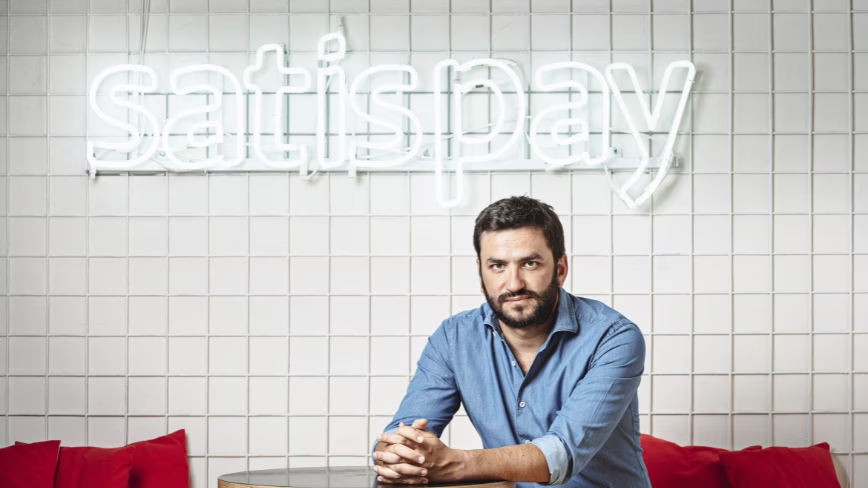 Satispay, the Milan-based mobile payments company that became Italy’s second unicorn in 2022, is reportedly planning to raise up to €120 million ($139 million) in fresh funding. The round would fuel the fintech’s expansion beyond payments into stock and ETF trading, savings, investments, and pensions. Existing investors are set to vote on the round on […] This story continues at The Next Web |
11/06/2026 10:10 AM | 3 | |
| 55,842 | 11/06/2026 09:05 AM | China’s state-run Workers’ Daily calls for a ‘dam’ to protect labour rights as AI spreads | chinas-state-run-workers-daily-calls-for-a-dam-to-protect-labour-rights-as-ai-spreads | 11/06/2026 |  China’s Workers’ Daily, the official mouthpiece of the country’s umbrella trade union, has published a pointed editorial urging government agencies to protect labour rights as artificial intelligence spreads across the economy. The newspaper, which is published by the All-China Federation of Trade Unions, titled the piece: “With the AI wave surging, how can we build […] This story continues at The Next Web |
11/06/2026 10:10 AM | 3 | |
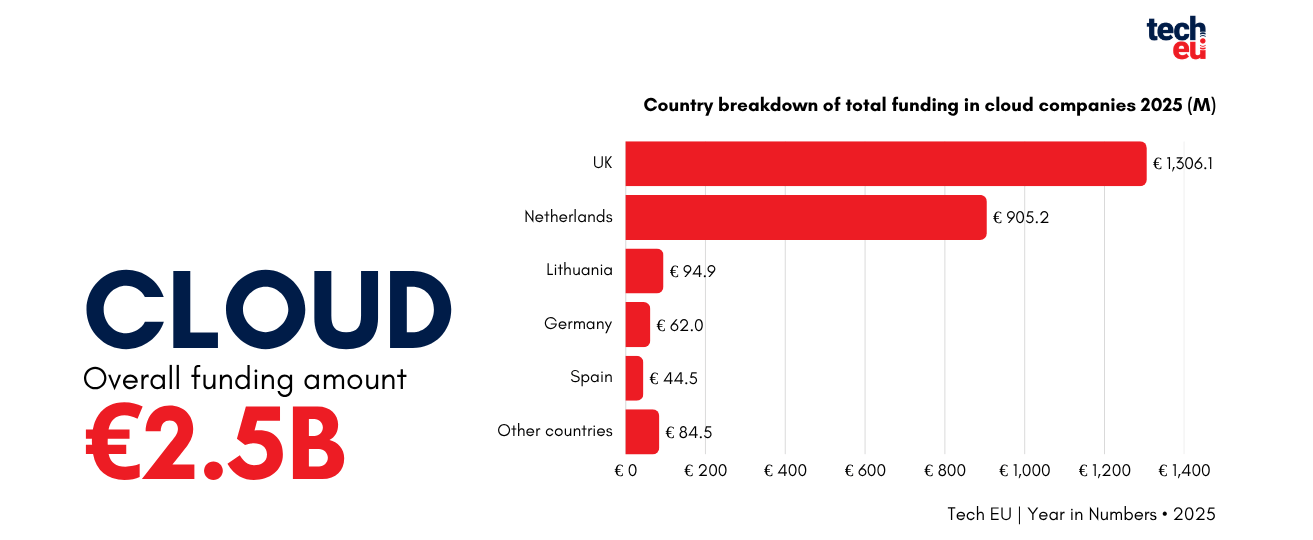
| 55,833 | 11/06/2026 09:00 AM | Cloud: 10 companies that raised the most in 2025 | cloud-10-companies-that-raised-the-most-in-2025 | 11/06/2026 | Funding activity among European cloud companies in 2025 was characterised by a small number of large transactions alongside a broader range of early- and growth-stage rounds. The largest deals accounted for a significant share of the total capital raised, reflecting the substantial funding requirements of cloud and AI infrastructure businesses. Geographically, funding activity was spread across Europe, with the Netherlands, Italy, Germany, Spain and the UK emerging as the most active markets. While Western Europe continued to dominate in terms of deal volume and capital raised, companies from Central and Eastern Europe also secured notable investments, highlighting the growing maturity of the region's cloud ecosystem. Funding activity was concentrated in growth-stage companies, with Series A, Series B and Series C rounds accounting for the largest share of capital raised. At the same time, seed, pre-seed, convertible and other funding rounds indicate continued investment across earlier stages of company development. The range of financing structures, including equity rounds and convertible notes, reflects the diversity of the sector, spanning both capital-intensive infrastructure businesses and software companies focused on cloud management, optimisation and automation.
Overall, the data highlights the diversity of Europe's cloud ecosystem, spanning AI infrastructure, sovereign cloud, cloud optimisation, developer platforms and data management technologies (for more detailed analyses of the European technology ecosystem, check out Tech.eu’s annual report: European Tech 2025 - The Big Picture).
|
11/06/2026 09:10 AM | 1 | |
| 55,843 | 11/06/2026 08:41 AM | Meta has cut Manus off from its internal systems and told staff to sunset the AI platform | meta-has-cut-manus-off-from-its-internal-systems-and-told-staff-to-sunset-the-ai-platform | 11/06/2026 |  Meta has erected a data firewall between itself and Manus, the Chinese-founded agentic AI service it acquired for $2 billion in December 2025. Since the start of June, Manus and its staff have been barred from accessing Meta’s internal data systems, and Meta employees can no longer use Manus tools for internal projects, according to Bloomberg. […] This story continues at The Next Web |
11/06/2026 10:10 AM | 3 | |
| 55,834 | 11/06/2026 08:30 AM | TurnUp raises €2 million to help healthcare providers reduce no-shows | turnup-raises-euro2-million-to-help-healthcare-providers-reduce-no-shows | 11/06/2026 | TurnUp, the Ghent-based startup helping dental and medical practices reduce no-shows and last-minute cancellations, has raised €2 million in a seed funding round led by Newion, with participation from RDY Ventures. Missed appointments remain a costly challenge for healthcare providers. No-shows are estimated to cost the healthcare sector hundreds of billions of euros annually, while reception teams often rely on manual processes such as phone calls, waiting lists and appointment reminders to fill vacant slots at short notice. TurnUp was founded in 2022 by Nicolas De Bruyne and Jona Decubber, with Koen Lepez joining as CEO in 2024 after initially investing in the company. The startup has developed an AI platform that integrates with existing practice management systems to predict no-shows and automate follow-up actions. By analysing historical patient data, scheduling patterns and external factors, the platform identifies appointments at risk of being missed and proactively engages patients through targeted communications. In addition to its predictive capabilities, the platform automates tasks such as appointment confirmations, cancellations, rescheduling and waiting list management. Its AI receptionist, Elissa, can contact patients across multiple languages and outside regular office hours, helping practices reduce administrative workloads and make better use of available appointment capacity. Today, TurnUp serves more than 250 practices across Belgium, the Netherlands and the UK, covering more than 2,500 dentists. According to the company, the platform has helped prevent more than 500,000 no-shows while saving receptionists and practice managers tens of thousands of hours of administrative work.
says Koen Lepez, CEO of TurnUp. The company will use the funding to expand its commercial operations, strengthen its technical team and accelerate growth in the UK, where it is already running a pilot programme with a group of 400 healthcare practices. |
11/06/2026 09:10 AM | 1 | |
| 55,844 | 11/06/2026 08:26 AM | CoreWeave’s borrowing costs just fell from 10% to 7%. The AI data centre debt market is repricing risk in real time. | coreweaves-borrowing-costs-just-fell-from-10percent-to-7percent-the-ai-data-centre-debt-market-is-repricing-risk-in-real-time | 11/06/2026 |  An Applied Digital subsidiary raised $1.59 billion in the high-yield bond market on Tuesday to fund a fourth building at its Polaris Forge 1 campus in North Dakota, which will provide 150 megawatts of computing capacity for CoreWeave under a 15-year contract. The bonds were priced to yield 7%, a steep drop from the 10% investors demanded […] This story continues at The Next Web |
11/06/2026 10:10 AM | 3 | |
| 55,846 | 11/06/2026 08:21 AM | The EU-Startups Podcast | Interview with Janne Hietala, CEO of Kelluu | the-eu-startups-podcast-or-interview-with-janne-hietala-ceo-of-kelluu | 11/06/2026 |
In this exclusive interview, Janne Hietala, CEO of Kelluu, discusses how his company is pioneering the use of autonomous, hydrogen-powered airships to revolutionise aerial monitoring. Unlike traditional drones or satellites, Kelluu’s fleet delivers persistent, high-accuracy environmental data in extreme conditions – from Arctic temperatures to GPS-denied environments. Learn how these near-silent, emission-free platforms are reshaping intelligence, surveillance, and environmental monitoring for defence, infrastructure, and beyond. From its humble beginnings in a Finnish farm shed to its recent €15 million Series A funding, Kelluu has proven its platform in real-world conditions, including NATO exercises and Arctic operations. The company’s autonomous airships aim to bridge the gap between satellites and drones, offering unmatched persistence and precision for critical missions. Key Points
The post The EU-Startups Podcast | Interview with Janne Hietala, CEO of Kelluu appeared first on EU-Startups. |
11/06/2026 10:10 AM | 6 | |
| 55,835 | 11/06/2026 08:11 AM | Avast’s former CEO built an AI that found every OpenSSL zero-day this year. Now it runs inside air-gapped networks. | avasts-former-ceo-built-an-ai-that-found-every-openssl-zero-day-this-year-now-it-runs-inside-air-gapped-networks | 11/06/2026 |  AISLE, the cybersecurity startup founded by former Avast CEO Ondrej Vlcek, launched Snapshot on Tuesday, a product that deploys its AI vulnerability scanner inside a customer’s private cloud, on-premises data centre, or fully air-gapped environment. Source code and security data never leave the organisation’s control. The product is aimed squarely at regulated industries, banks, defence […] This story continues at The Next Web |
11/06/2026 09:10 AM | 3 | |
| 55,831 | 11/06/2026 08:00 AM | sunbay.io raises €550K to automate invoice collection for finance teams | sunbayio-raises-euro550k-to-automate-invoice-collection-for-finance-teams | 11/06/2026 | Warsaw-based sunbay.io, a platform helping finance teams recover overdue invoices faster, has raised €550,000 in funding from Kogito Ventures, with participation from s20 and a group of angel investors, including Jostein Håvaldsrud, CTO of Kahoot. The company already works with more than 20 businesses across five countries, collecting payments from customers in 30 markets. For growing companies, collecting overdue payments is often a manual and time-consuming process. Finance teams must track outstanding invoices, send follow-ups, manage exceptions and decide when to escalate cases, often relying on spreadsheets, email threads and basic accounting-system reminders. While ERP and accounting platforms can send standard payment reminders, they are not designed to manage collections according to each company's workflows and customer relationships. As a result, a process that directly affects cash flow still requires significant manual effort. sunbay.io was founded by Filip Szczeciński, Dawid Dzierzyński and Nikodem Cabała after conversations with finance leaders revealed how much time teams spent managing receivables. The founders set out to automate the process while keeping finance professionals involved where judgement is needed.
says Filip Szczeciński, co-founder of sunbay.io. The platform connects directly to invoice data and automates collections according to each company's rules. It follows up on overdue payments via email, SMS and AI voice calls, manages escalations, provides a branded payment portal and involves finance teams only when decisions require human input. sunbay.io is now expanding the platform with predictive insights and additional automation. The product already surfaces credit-scoring and payment-behaviour signals to help teams identify at-risk accounts before they become seriously overdue. Future AI agents will automate further tasks, analyse payment data and support faster decision-making. Built for European finance teams, the platform keeps customer and receivables data within the EEA, avoids transatlantic data transfers and is designed with GDPR compliance at its core. |
11/06/2026 08:10 AM | 1 | |
| 55,838 | 11/06/2026 07:47 AM | Amsterdam’s OurMind raises €2.1 million to reduce healthcare admin burden with AI | amsterdams-ourmind-raises-euro21-million-to-reduce-healthcare-admin-burden-with-ai | 11/06/2026 | OurMind, an Amsterdam-based startup developing AI solutions to reduce administrative burdens on healthcare providers and to reduce burnout, has raised €2.1 million to scale and expand its platform. The round was led by 4impact capital, with a group of general practitioners and medical specialists also making a significant contribution. Paul Koning, a former orthopaedic surgeon and OurMind founder, said, “This investment enables us to scale up and expand our platform so that we can meet, and continue to meet, demand from hospitals. Ultimately, this is not about AI, but about how we can continue to deliver good care with the same number of people.” Founded in 2024 by Marco Ferraz, Paul Koning, Renan Sales Barros and Fredrik Gustafsson, OurMind is building a personal AI platform that grows with the user and helps free up more time for patient care. According to the company, healthcare waiting lists are growing, doctors are working overtime, and administrative pressure continues to mount. As a result, job satisfaction among healthcare staff is declining. Citing a study by De Jonge Specialist, the company reports that a quarter of young doctors are experiencing burnout symptoms. Highlighting the urgency of the issue, OurMind notes that one in seven workers in the Netherlands is employed in healthcare. However, the Scientific Council for Government Policy (WRR) forecasts that by 2040, one in four workers will be needed in the healthcare sector. Cardiologist and CMIO Bart Driesen of Maasziekenhuis Pantein said, “Five years ago, there was not really a sense of necessity yet. Now there is. We have more than 150 patients with a new referral on the waiting list who cannot even get an appointment right away. That is simply not sustainable. “Ultimately, you need an AI layer across the entire hospital. Doctors currently spend two to three hours a day preparing consultations, often at home in the evening. If AI can largely take that over, it changes our working day.” OurMind claims that it collaborates closely with healthcare professionals to gradually and securely integrate generative AI into the healthcare system, addressing the growing workforce shortage. The Dutch startup started with Notes: AI software that converts conversations during consultations into medical documentation. Currently, over 300 general practices and 14 hospitals utilise the platform. It is continuously expanding to include applications for consultation preparation, administrative support, patient communication, and other functionalities. According to Koning, the ultimate goal is to preserve job satisfaction and thereby reduce the number of burnouts in healthcare. “A burnout is not only extremely difficult for the person affected, but also for the colleagues left behind and the hospital. After all, they have to absorb the impact. Fortunately, the first hospital boards are realising that the costs of doing nothing — staff absence, waiting lists, people leaving the profession — are far greater than the costs of seriously investing in AI support now.” This is the first HealthTech investment for Dutch venture capital fund 4impact capital. It primarily invests in software companies addressing societal themes such as energy, sustainability, and digitalisation. 4impact’s investment in OurMind is supported by Invest-NL and the European Union under the InvestEU Fund. 4impact partner Victor Straatman states that this investment is different from classic private-equity structures. “We are a venture capital investor. That means everything OurMind earns stays in the company for further development.” 4impact expects to remain actively involved. “We help not only with capital, but also with knowledge, network, and guidance. We believe in OurMind’s vision and in the team that is in place.” OurMind emphasises that it is secure, GDPR compliant, and certified with ISO27001 and NEN7510. The post Amsterdam’s OurMind raises €2.1 million to reduce healthcare admin burden with AI appeared first on EU-Startups. |
11/06/2026 09:10 AM | 6 | |
| 55,836 | 11/06/2026 07:43 AM | Oracle spent $55.7 billion on data centres in a single year, beat its own guidance by $5.7 billion, and wants to raise another $40 billion | oracle-spent-dollar557-billion-on-data-centres-in-a-single-year-beat-its-own-guidance-by-dollar57-billion-and-wants-to-raise-another-dollar40-billion | 11/06/2026 |  Oracle reported fiscal fourth-quarter revenue of $19.2 billion, up 21% year on year, and adjusted earnings of $2.11 per share, beating analyst estimates of $19.1 billion and $1.97 respectively. The numbers were overshadowed by capital expenditure that came in well above the company’s own projections. The company spent approximately $55.7 billion on capital expenditure in […] This story continues at The Next Web |
11/06/2026 09:10 AM | 3 | |
| 55,832 | 11/06/2026 06:59 AM | Musk says the ‘acid test’ for Tesla’s self-driving is sleeping through your commute. His Austin robotaxis crash four times more than humans. | musk-says-the-acid-test-for-teslas-self-driving-is-sleeping-through-your-commute-his-austin-robotaxis-crash-four-times-more-than-humans | 11/06/2026 |  Elon Musk has called the ability to fall asleep in a Tesla and wake up at your destination the “acid test” for true autonomy. He first described that vision in 2014 and repeated it on Tesla’s Q1 2025 earnings call, saying he was confident it would be available in many US cities by the end of that […] This story continues at The Next Web |
11/06/2026 08:10 AM | 3 | |
| 55,830 | 11/06/2026 06:03 AM | CameraMatics secures up to €49 million to scale AI-powered fleet intelligence platform across Europe and the US | cameramatics-secures-up-to-euro49-million-to-scale-ai-powered-fleet-intelligence-platform-across-europe-and-the-us | 11/06/2026 | CameraMatics, a Dublin-based AI-powered video telematics and fleet intelligence platform, has secured up to €49 million in investment to support its next phase of international expansion and ongoing product innovation as the company scales across the UK, Ireland, Europe, and the US. The investment was secured from a consortium led by Blume Equity, alongside the Ireland Strategic Investment Fund (ISIF) and Goodbody Capital Partners (on behalf of AIB). “This is a landmark moment for CameraMatics. When Simon and I founded the company in 2016, our ambition was to build a global technology platform that would fundamentally improve safety standards across commercial fleets. Our mission is simple but ambitious – to reduce driving and work-related accidents to zero through technology, AI and data-driven fleet intelligence,” said Mervyn O’Callaghan, co-founder and CEO of CameraMatics. Founded in 2016 by Mervyn O’Callaghan and Simon Murray, CameraMatics’ helps fleets reduce risks, cut costs, and run more efficient operations through AI-powered fleet intelligence. The company states that its connected fleet intelligence platforms combine AI-driven video intelligence, driver assistance systems and real-time operational analytics to help commercial fleet operators improve safety, reduce operational risk and lower carbon emissions. “Every day, our technology is helping fleet operators prevent accidents, improve driver behaviour and ultimately save lives on roads and worksites across multiple countries. That purpose continues to drive everything we do as a business. Since founding the company, we have delivered strong year-on-year growth, expanded internationally and earned the trust of many of the world’s leading fleet operators,” added O’Callaghan. The company notes that it continues to invest heavily in innovation, machine learning, predictive safety technologies and connected fleet intelligence solutions. It reports delivering strong revenue growth since its founding, expanding its customer base across international and domestic markets and securing leading blue-chip customers, accelerating enterprise adoption. Recent enterprise contract wins include organisations such as Royal Mail, Calor Gas, Wolseley, XPO, and DFDS. In the United States, the company has grown through deployments with NASDAQ-listed Installed Building Products (IBP), which operates in over 250 depots nationwide. It currently serves nearly 1,000 fleet customers and supports operations across thousands of commercial vehicles throughout the UK, Ireland, mainland Europe and the United States. The company employs more than 150 people across offices in Dublin, Waterford, Darlington, London, Amsterdam, Barcelona and the United States. Eleanor Blagbrough, co-founding Partner, Blume Equity, said, “Mervyn, Simon and the team have built something genuinely impressive in a large and growing market. CameraMatics has established itself as a clear category leader within the rapidly growing video telematics and connected fleet market. The company combines strong technology differentiation with impressive commercial execution, evidenced by its sustained growth trajectory, blue-chip customer base and accelerating international expansion. “Video telematics is at a tipping point as fleet operators increasingly recognise the operational, safety and sustainability benefits of connected fleet technology. We are particularly excited by the company’s long-term mission to use AI and connected fleet intelligence to materially improve global road safety outcomes.” The company plans to use this fresh capital to accelerate CameraMatics’ go-to-market expansion, strengthen its enterprise sales and customer success capabilities, further invest in AI and sustainability-focused product innovation, and support the company’s continued growth across North America and mainland Europe. Existing investors, including Puma Growth Partners, Sure Valley Ventures and Enterprise Ireland, will remain shareholders in the business. Salica Investments will continue to support the growth of CameraMatics through the continuation of debt finance. O’Callaghan and Murray will continue to lead the company’s long-term growth strategy. “This investment from Blume Equity, ISIF and Goodbody Capital Partners gives us the capital and strategic support to accelerate our next phase of growth – scaling internationally, deepening our AI capabilities and continuing to invest in technologies that can help change driving standards globally,” commented O’Callaghan. The post CameraMatics secures up to €49 million to scale AI-powered fleet intelligence platform across Europe and the US appeared first on EU-Startups. |
11/06/2026 07:10 AM | 6 | |
| 55,829 | 11/06/2026 06:00 AM | Mendo secures €12M to scale enterprise AI adoption in Europe | mendo-secures-euro12m-to-scale-enterprise-ai-adoption-in-europe | 11/06/2026 | Mendo, the French startup helping enterprises adopt generative and agentic AI, has raised €12 million in Series A funding. The round was led by Ventech and Educapital, with participation from Tomcat and OVNI. The funding will support the company’s continued product development, team growth and expansion across Europe. Despite rapid advances in AI technology, many organisations still struggle to move beyond experimentation. While businesses are investing heavily in AI initiatives, turning them into widely adopted and impactful solutions often requires more than the technology itself. Successful deployment depends on integrating AI into everyday workflows and ensuring employees are equipped to use it effectively. Founded in 2021, Mendo was built to address this gap. Its platform acts as a bridge between AI tools and the people expected to use them, helping organisations turn AI investments into measurable business outcomes. Through its platform, Mendo helps organisations identify practical AI use cases, encourage adoption across teams and maximise the value of their AI initiatives while supporting employees throughout the transformation process. The emergence of agentic AI is changing how organisations deploy AI. As AI becomes embedded across business functions, the challenge shifts from implementing technology to transforming how people and processes work. Mendo helps companies identify where AI can create the most value, determine where agents should be deployed and support adoption across teams.
explains Quentin Amaudry, CEO and co-founder of Mendo. With this new funding, Mendo will focus on three priorities: strengthening its analytics capabilities to help organisations identify high-impact AI use cases and measure adoption, which early results show can be up to six times higher than with traditional approaches, doubling its workforce from 50 to 100 employees, primarily across product, engineering and sales, and accelerating its expansion across key European markets to meet growing demand for AI adoption support. The funding marks an important milestone for Mendo as it seeks to help more organisations translate AI investments into measurable business value and sustainable adoption at scale. |
11/06/2026 06:11 AM | 1 | |
| 55,824 | 11/06/2026 05:00 AM | The 20 fastest-growing Dutch and Belgian startups, based on revenue data | the-20-fastest-growing-dutch-and-belgian-startups-based-on-revenue-data | 11/06/2026 | 11/06/2026 04:10 AM | 5 | ||
| 55,825 | 11/06/2026 05:00 AM | Continuation fund craze: who really wins when VCs sell to themselves? | continuation-fund-craze-who-really-wins-when-vcs-sell-to-themselves | 11/06/2026 | 11/06/2026 04:10 AM | 5 | ||
| 55,826 | 11/06/2026 05:00 AM | Can France’s Stargate-style buildout succeed? | can-frances-stargate-style-buildout-succeed | 11/06/2026 | 11/06/2026 04:10 AM | 5 | ||
| 55,827 | 11/06/2026 05:00 AM | Exclusive: Isar and IQM backer Vsquared opens UK office to bridge London-Munich axis | exclusive-isar-and-iqm-backer-vsquared-opens-uk-office-to-bridge-london-munich-axis | 11/06/2026 | 11/06/2026 04:10 AM | 5 | ||
| 55,828 | 11/06/2026 04:02 AM | Opendoor’s India exit is fueling a bigger conversation about AI and outsourcing | opendoors-india-exit-is-fueling-a-bigger-conversation-about-ai-and-outsourcing | 11/06/2026 | 11/06/2026 04:10 AM | 7 | ||
| 55,823 | 11/06/2026 03:11 AM | Anthropic Walks Back Policy That Could Have ‘Sabotaged’ AI Researchers Using Claude | anthropic-walks-back-policy-that-could-have-sabotaged-ai-researchers-using-claude | 11/06/2026 | The company changed course after researchers spoke out against the policy, which would have covertly limited Claude’s ability to develop competing AI models. | 11/06/2026 04:10 AM | 4 | |
| 55,820 | 10/06/2026 11:08 PM | Palantir’s Karp says Sanders will regret only asking for 50% of AI companies. Full nationalization is coming. | palantirs-karp-says-sanders-will-regret-only-asking-for-50percent-of-ai-companies-full-nationalization-is-coming | 10/06/2026 |  Palantir CEO Alex Karp says full nationalization of AI companies is coming, and that Senator Bernie Sanders’ proposal for 50% public ownership will soon look moderate. “In two years, they’re not going to think Bernie Sanders is progressive,” Karp told CNBC on Wednesday. “They’re going to be like, ‘Bernie Sanders, you only want 50%? What […] This story continues at The Next Web |
11/06/2026 12:23 AM | 3 |