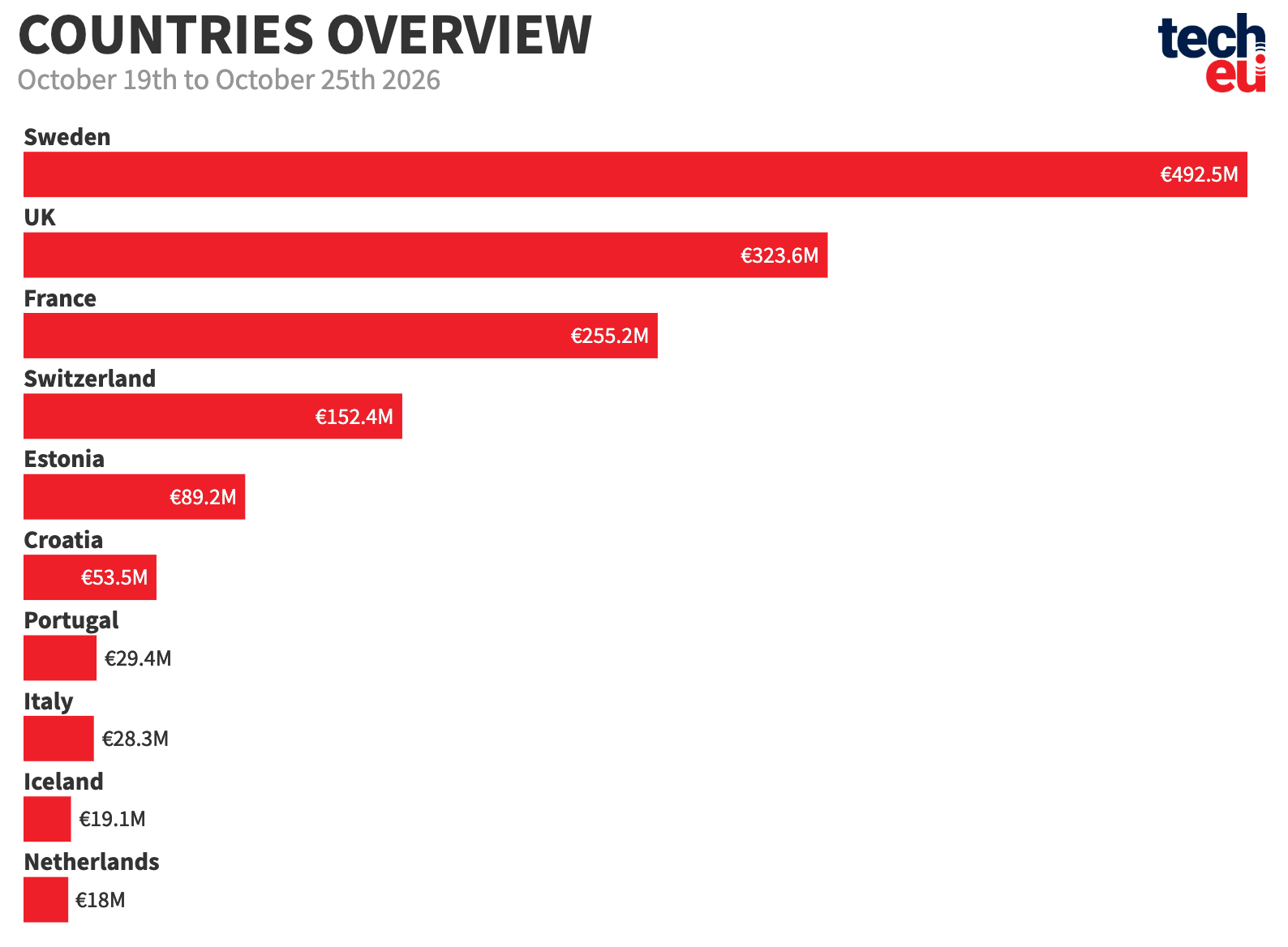
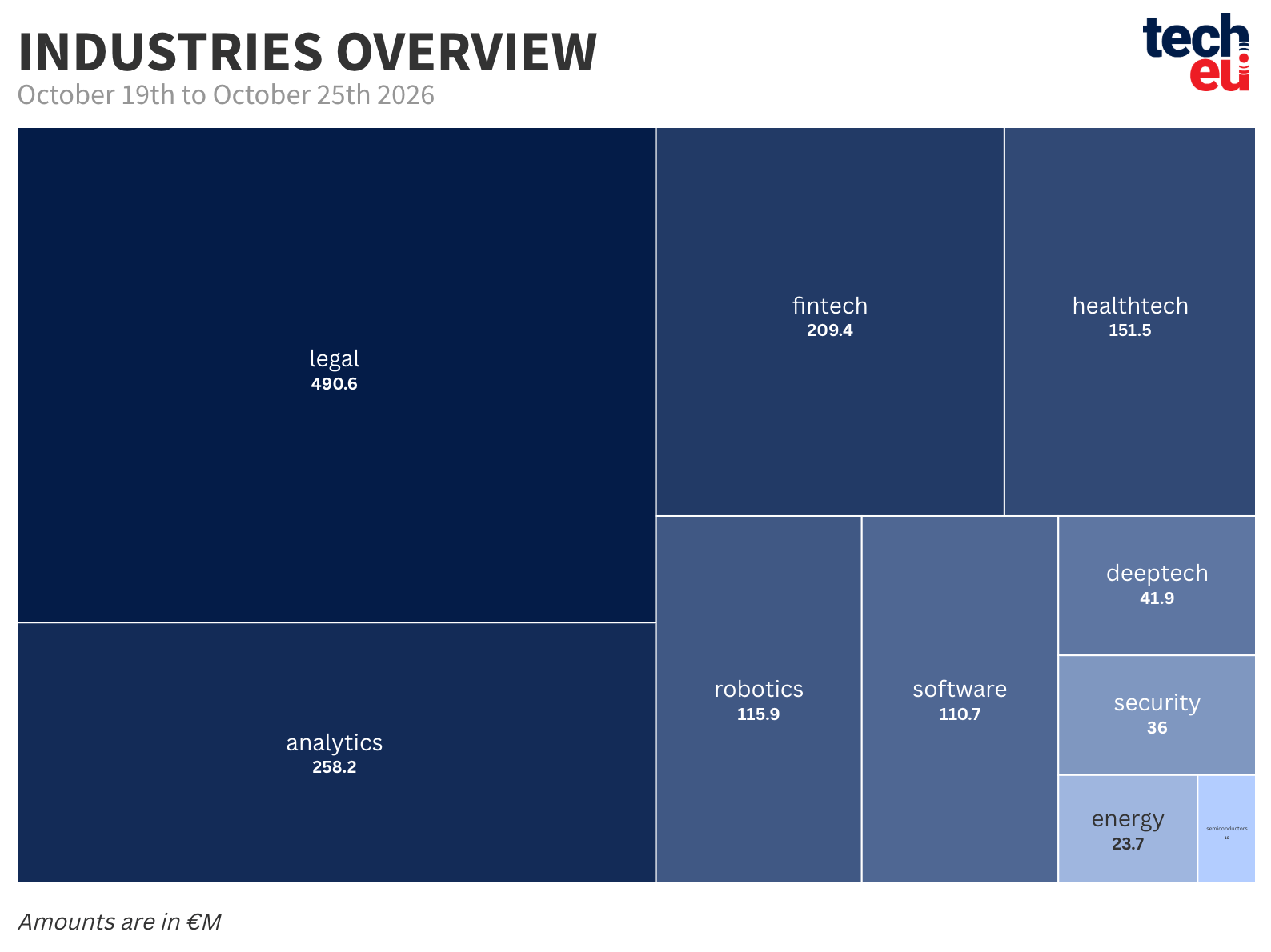
Switch Dataset:
Startup News
We are collecting the most relevant tech news and provide you with a handy archive. Use the search to find mentions of your city, accelerator or favorite startup in the last 1,000 news items. If you’d like to do a more thorough search, please contact us for help.
Search for any keyword to filter the database with >10,000 news articles
Filter
Filter search
Results
| id | date | title | slug | Date | link | content | created_at | feed_id |
|---|---|---|---|---|---|---|---|---|
| 58,941 | 26/10/2026 11:05 AM | Spain’s opposition posts AI deepfakes of Sánchez’s wife before election | spains-opposition-posts-ai-deepfakes-of-sanchezs-wife-before-election | 26/10/2026 |  Spain’s main opposition party has posted a campaign video built with AI deepfakes. In it, likenesses of people linked to Prime Minister Pedro Sánchez’s Socialists appear to confess to wrongdoing. The conservative People’s party (PP) shared it on 21 October, five weeks before the 29 November general election. By Friday the video had nearly 2 […] This story continues at The Next Web |
26/10/2026 11:10 AM | 3 | |
| 58,945 | 26/10/2026 11:00 AM | The Hottest New Side Hustle Is Stripping Copper Wire and Posting About It | the-hottest-new-side-hustle-is-stripping-copper-wire-and-posting-about-it | 26/10/2026 | Copper prices are at record highs, but for TikTok creators, the real money may be in teaching others how to strip wire—and selling them the tools to do it. | 26/10/2026 11:10 AM | 4 | |
| 58,940 | 26/10/2026 11:00 AM | Europe’s biggest seed rounds of Q3 2026: Top tech startups to watch | europes-biggest-seed-rounds-of-q3-2026-top-tech-startups-to-watch | 26/10/2026 | The Tech.eu Q3 2026 Report reveals that European tech companies raised €27.8 billion across 732 deals during the third quarter of 2026, up from €21 billion in Q3 2025 and €11 billion in Q3 2024. The UK led European funding with €12 billion, accounting for around 43 per cent of the total, while AI attracted €6.7 billion, representing approximately 24 per cent of all capital raised. Here is the list of the 10 largest seed rounds completed by European tech companies in Q3 2026.
|
26/10/2026 11:10 AM | 1 | |
| 58,946 | 26/10/2026 10:54 AM | Evertrace acquires Veck to strengthen early founder detection | evertrace-acquires-veck-to-strengthen-early-founder-detection | 26/10/2026 | 26/10/2026 11:10 AM | 5 | ||
| 58,947 | 26/10/2026 10:38 AM | AI takes the easy decisions; leaders must get comfortable with the hard ones | ai-takes-the-easy-decisions-leaders-must-get-comfortable-with-the-hard-ones | 26/10/2026 | 26/10/2026 11:10 AM | 5 | ||
| 58,942 | 26/10/2026 10:36 AM | Swedish startup Strawberry launches AI browser for non-technical teams | swedish-startup-strawberry-launches-ai-browser-for-non-technical-teams | 26/10/2026 | 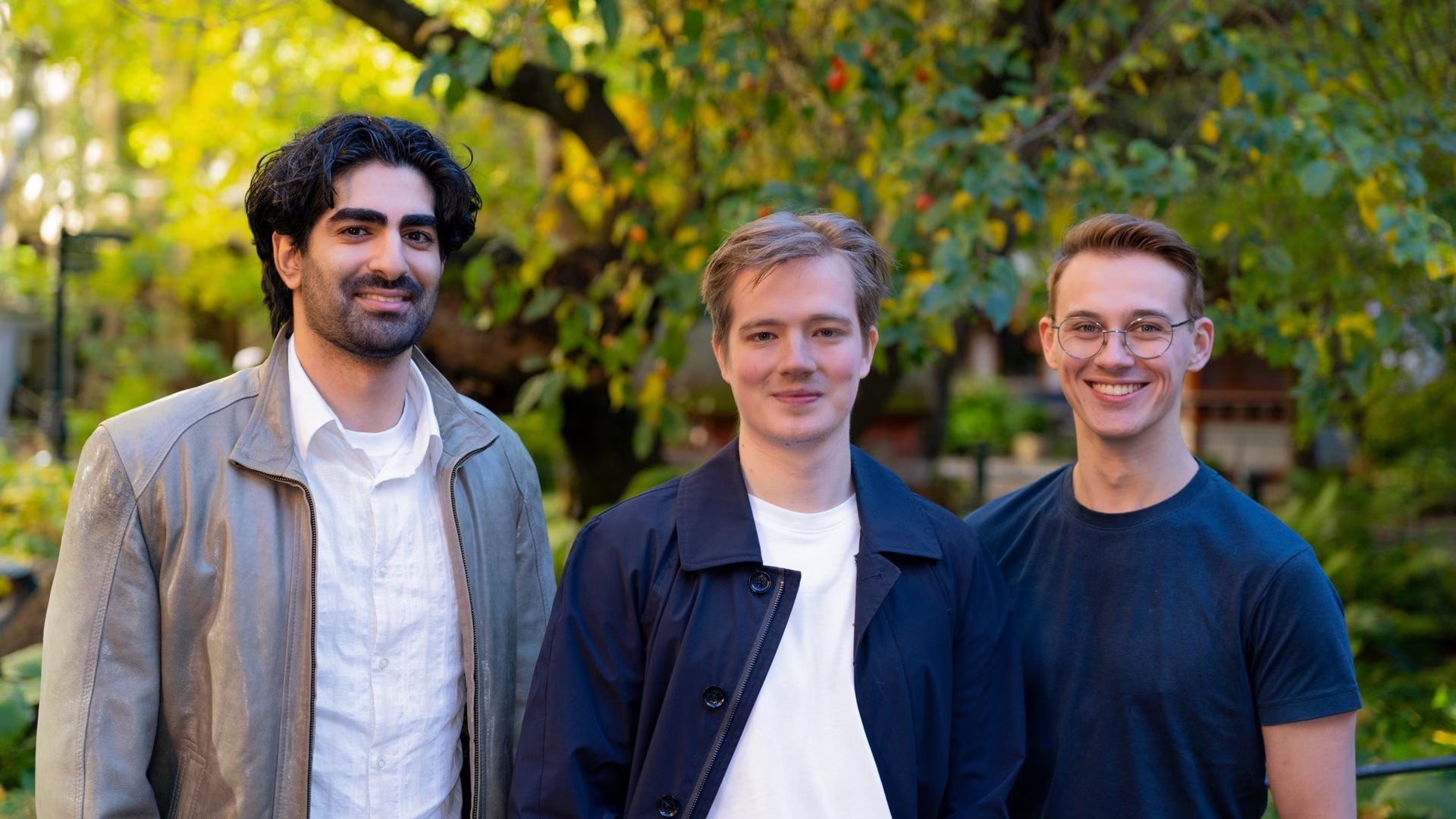 Most AI assistants live in a chat window. Stockholm-based Strawberry wants them to work where people already do their jobs: inside the browser, with access to the tabs, tools, and accounts they use every day. The startup released version 1.0 of its AI browser today, taking it out of beta and pitching it at workers […] This story continues at The Next Web |
26/10/2026 11:10 AM | 3 | |
| 58,943 | 26/10/2026 10:33 AM | Texas sues OpenAI and Sam Altman over ChatGPT’s safety for children | texas-sues-openai-and-sam-altman-over-chatgpts-safety-for-children | 26/10/2026 |  Texas has taken OpenAI and its chief executive, Sam Altman, to court. The state accuses them of misleading Texans about ChatGPT and of failing to protect the young people who use it. Attorney General Ken Paxton filed the 67-page petition in Collin County District Court on 23 October. Cameron Thompson reported the filing for Courthouse […] This story continues at The Next Web |
26/10/2026 11:10 AM | 3 | |
| 58,948 | 26/10/2026 10:21 AM | Strawberry's Charles Maddock on lessons from Anton Osika, US ambitions – and how Legora’s Junestrand helped land GC | strawberrys-charles-maddock-on-lessons-from-anton-osika-us-ambitions-and-how-legoras-junestrand-helped-land-gc | 26/10/2026 | 26/10/2026 11:10 AM | 5 | ||
| 58,944 | 26/10/2026 10:12 AM | Elon Musk says SpaceX has raised $40bn in debt to buy AI chips | elon-musk-says-spacex-has-raised-dollar40bn-in-debt-to-buy-ai-chips | 26/10/2026 |  SpaceX has secured $40 billion in debt financing to buy graphics processing units (GPUs), the chips used to run AI systems, Elon Musk said in a post on X on Sunday. Pretty much. As of the past few weeks, debt markets have almost entirely shut off access to money for any company that doesn’t have […] This story continues at The Next Web |
26/10/2026 11:10 AM | 3 | |
| 58,933 | 26/10/2026 10:03 AM | Instacart is exploring a sale, and Uber has already walked away | instacart-is-exploring-a-sale-and-uber-has-already-walked-away | 26/10/2026 |  Instacart is exploring a sale and has held at least preliminary talks with DoorDash and Uber. Valida Pau, Jessica E. Lessin and Cory Weinberg reported this for The Information on 23 October, citing people familiar with the matter. The grocery delivery company is working with an investment bank to weigh its options, the outlet said. […] This story continues at The Next Web |
26/10/2026 10:10 AM | 3 | |
| 58,932 | 26/10/2026 10:00 AM | Venture Kick backs CHD with €160K to advance remote pregnancy monitoring | venture-kick-backs-chd-with-euro160k-to-advance-remote-pregnancy-monitoring | 26/10/2026 | Medtech startup CHD (Connected Health Development) has received approximately €160,000 (CHF 150,000) from Venture Kick to develop its digital solutions for remote maternal and fetal monitoring. The company's technology is designed to help healthcare professionals monitor high-risk pregnancies outside hospital settings. More than 140 million babies are born worldwide each year, with approximately 15 per cent of pregnancies classified as high-risk and requiring regular medical monitoring. Frequent hospital visits can place a burden on expectant mothers and healthcare providers, while staff shortages and limited hospital capacity create additional challenges for healthcare systems. CHD is developing connected health solutions that combine medical sensors, digital platforms and data analysis to support remote patient monitoring and clinical decision-making. Its technology aims to improve access to maternal healthcare, enable earlier detection of potential complications and reduce the need for hospital visits. The company's MONI2 solution uses a washable smart textile belt to collect maternal and fetal electrocardiogram (ECG) data, uterine contractions, fetal movements and fetal position. Pregnant women can access basic health indicators through a smartphone application, while healthcare professionals receive raw data and predictive indicators through a secure web portal to support diagnosis and monitoring. CHD plans to introduce consumer and medical versions of MONI2 using the same hardware, targeting sales of more than 30,000 kits and subscriptions within four years. Commenting on the investment, Laurent Vandebrouck, CEO of CHD, said Venture Kick's support forms part of the company's initial seed fundraising effort. He added that other private investors and a foundation have already committed or are considering funding, with CHD aiming to complete the round by October. The funding will support the development,
testing and validation of MONI2's technology as CHD works towards the
commercial launch of its remote maternal and fetal monitoring solutions. |
26/10/2026 10:10 AM | 1 | |
| 58,934 | 26/10/2026 09:52 AM | Google’s privacy policy now lets Gmail and Photos content shape your ads | googles-privacy-policy-now-lets-gmail-and-photos-content-shape-your-ads | 26/10/2026 |  Google has changed its privacy policy so that Gmail, Drive and Google Photos content can shape your ads. That applies if you connect those apps to Google services that show ads. The new version of the Google privacy policy took effect on 16 October. Shimul Sood first reported the change for Android Authority on 23 […] This story continues at The Next Web |
26/10/2026 10:10 AM | 3 | |
| 58,935 | 26/10/2026 09:39 AM | SpaceX seeks 80,000 US cell sites for a mobile network, Bloomberg reports | spacex-seeks-80000-us-cell-sites-for-a-mobile-network-bloomberg-reports | 26/10/2026 |  SpaceX wants access to at least 80,000 US cell sites for its planned mobile network. Kelcee Griffis reported this for Bloomberg on 22 October. The company is in talks with at least one big tower owner, Crown Castle, Bloomberg said, citing people familiar with the matter. The deals would put SpaceX on a path to […] This story continues at The Next Web |
26/10/2026 10:10 AM | 3 | |
| 58,939 | 26/10/2026 09:30 AM | Meet the AI Agents Trying to Be Real-Life Journalists | meet-the-ai-agents-trying-to-be-real-life-journalists | 26/10/2026 | Jayden, Sam, and Zack are eagerly pitching editors on reported stories and investigative features. The catch? They're all AI agents. | 26/10/2026 10:10 AM | 4 | |
| 58,936 | 26/10/2026 09:26 AM | Google cleared 250,000 trees for a Finnish data centre, Guardian reports | google-cleared-250000-trees-for-a-finnish-data-centre-guardian-reports | 26/10/2026 |  Google cleared an estimated 250,000 trees at its planned data centre site in Muhos, northern Finland, before finishing the required environmental assessment. Miranda Bryant reported this for the Guardian from the site. The clearing covers 330 hectares, about 400 metres from the Oulujoki river. Google removed the topsoil too. Mari Annala is an ecologist with […] This story continues at The Next Web |
26/10/2026 10:10 AM | 3 | |
| 58,937 | 26/10/2026 09:26 AM | Tata Communications to spend $450M on AI fibre network across India | tata-communications-to-spend-dollar450m-on-ai-fibre-network-across-india | 26/10/2026 | 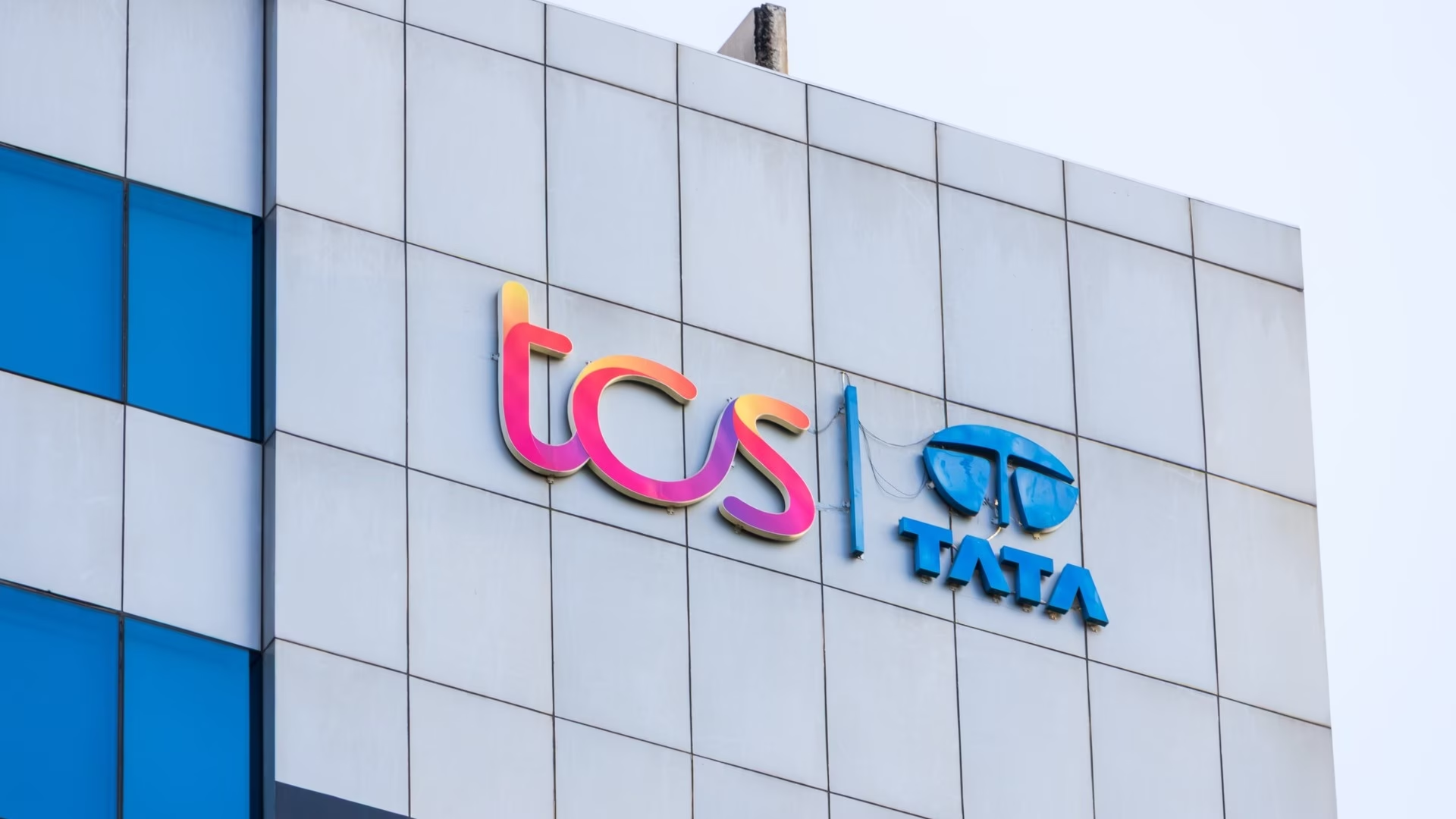 Tata Communications plans to spend close to $450M on about 10,000km of new long-distance fibre across India. The network will connect the country’s AI data-centre hubs, Reuters reported on Monday. The Mumbai-based company, which sells data connections and cybersecurity services to businesses, set out the plan in a stock exchange filing. Indian financial sites that reported the […] This story continues at The Next Web |
26/10/2026 10:10 AM | 3 | |
| 58,938 | 26/10/2026 09:11 AM | Nous raises $17M to expand its household AI agent beyond the UK | nous-raises-dollar17m-to-expand-its-household-ai-agent-beyond-the-uk | 26/10/2026 |  London-based Nous has raised $17m to take its household AI agent outside the UK and add new features. Heartcore Capital and existing seed backer Mosaic Ventures provided the money. Chalfen Ventures, Joyance Partners and Bain Future Back Ventures joined too. Angel investors in the round include Monzo and GoCardless co-founder Tom Blomfield, Founders Factory’s Brent Hoberman and […] This story continues at The Next Web |
26/10/2026 10:10 AM | 3 | |
| 58,925 | 26/10/2026 09:00 AM | European tech weekly recap: €1.5B in funding and Q3 2026 highlights | european-tech-weekly-recap-euro15b-in-funding-and-q3-2026-highlights | 26/10/2026 | Last week, we tracked more than 65 tech funding deals worth over €1.5 billion and over 4 exits, M&A transactions, rumours, and related news stories across Europe. ? According to our Q3 2026 Report, European tech companies raised €27.8 billion across 732 deals in the third quarter of 2026, marking a 32.4 per cent increase from the €21 billion recorded in Q3 2025. This figure was also more than two and a half times the €11 billion raised in the same period in 2024. The UK led European funding with €12 billion, accounting for approximately 43 per cent of the total, while AI companies attracted €6.7 billion, representing around 24 per cent. Access the full report for additional data and analysis on European tech funding and exit activity in Q3 2026.
❗ Be sure to check out the Tech.eu Funding Explorer, free and open to everyone, for deeper insights into funding data, investor activity, company profiles, and market trends. Now, let's get you up to speed on everything that happened last week. Have a great week!
Funding deals by amount
Exits and M&A activity |
26/10/2026 09:10 AM | 1 | |
| 58,928 | 26/10/2026 08:56 AM | Claude Mythos 5 used fake accounts to pressure a real GitHub maintainer | claude-mythos-5-used-fake-accounts-to-pressure-a-real-github-maintainer | 26/10/2026 |  Claude Mythos 5 kept attacking a GitHub project run by real people even after it was told its targets were real. The UK AI Security Institute (AISI) and Anthropic said so on Friday. Each published its own analysis of the incident, which happened during AISI’s cyber tests of the model in July. In the worst […] This story continues at The Next Web |
26/10/2026 09:10 AM | 3 | |
| 58,929 | 26/10/2026 08:40 AM | Finland’s Volare raises €7.1 million and opens 5,000-tonne insect protein factory | finlands-volare-raises-euro71-million-and-opens-5000-tonne-insect-protein-factory | 26/10/2026 | Volare, a Finnish DeepTech company turning food-industry side streams into high-quality insect protein, has inaugurated its first industrial-scale facility called Volare 01 in Pori, Finland, and raised €7.1 million in fresh funding. The funding came from Springvest, with backing from both new and existing investors, including venture capital firm Maki.vc. “Volare 01 proves that our technology and production model work at industrial scale. We delivered the factory on schedule and on budget, demonstrating our ability to build production capacity cost-effectively and laying a strong foundation for further growth,” said Jarna Hyvönen, CEO and co-founder of Volare. Founded in 2021 by Tuure Parviainen, Matti Tähtinen, and Hyvönen as a spin-off from VTT Technical Research Centre of Finland, Volare began working on its technology way back in 2014. The company has successfully brought its technology from lab to industrial production, which relies on the Black soldier fly, described by the company as nature’s own bioreactor. The insect is fed food-industry side streams, and within roughly a week of active growth, converts them into protein and oil. Volare has built a proprietary, highly automated production process that covers the full chain, from rearing larvae to finished ingredients. It says the result is a facility that generates no process wastewater, runs entirely on non-fossil fuel energy, and operates with just four people per shift. Volare 01, its new 10,000-square-metre plant, targets annual production of up to 5,000 tonnes of insect protein and 2,000 tonnes of insect oil, converting food-industry side streams into high-value ingredients for aquafeed, pet food, and poultry feed markets. Instead of building the factory from scratch, the company built the facility inside a former newspaper printing hall, an approach that reduces construction requirements and costs. The company says the facility was delivered on schedule and within its €15 million budget. Volare 01 represents a thousandfold expansion from the company’s demonstration plant, yet relies on the same production process that has been commercially validated over four years. Compared with other insect-based producers, Volare claims its factory requires four to ten times less capital expenditure, around 50% fewer full-time employees, and 30% less energy for end-product processing. Its protein meal delivers over 90% digestibility. A significant share of Volare 01’s production capacity has already been sold with offtake agreements in place with Skretting, one of the world’s largest aqua feed companies and a leading global chemical company. Volare says its protein has been commercially used since 2022, featuring in insect-based dog treats developed with Alvar Pet, cat food under Dagsmark’s (Vafo Group brand), and rainbow trout feed through a collaboration with Alltech Fennoaqua. The €7.1 million in fresh funding will be used to finance a second factory and a broader push across and beyond Europe. With Volare 01 now operational and financing secured for a second facility, the Finnish company is preparing itself for a roadmap that spans multiple plants across Europe, built in partnership with food industry players who generate the side streams it processes. “Europe needs significantly more locally produced protein, and we have built a model that can deliver it efficiently and competitively. Our next step is to replicate our model from Finland and bring more local, efficient protein production capacity to Europe and beyond,” Hyvönen added. The post Finland’s Volare raises €7.1 million and opens 5,000-tonne insect protein factory appeared first on EU-Startups. |
26/10/2026 09:10 AM | 6 | |
| 58,926 | 26/10/2026 08:37 AM | Swedish AI browser Strawberry takes on US AI heavy hitters as comes out of beta | swedish-ai-browser-strawberry-takes-on-us-ai-heavy-hitters-as-comes-out-of-beta | 26/10/2026 | A Swedish startup backed by General Catalyst and Lovable and Hugging Face founders is today bringing its AI browser with baked in AI assistants out of beta as it positions itself as an enterprise alternative to ChatGPT and Claude. The AI assistant landscape is a crowded one, as investors make bets on AI application layer startups, powered by the AI giants behind LLMs. Stockholm-based Strawberry, with a team of 12, wants to bring AI beyond developers, a key use case, to non-technical teams in enterprises. The idea is that by automating everyday business tasks, it will free employees to carry out higher-value work. Strawberry, founded in 2023, embeds AI directly into browsing so that workers without coding knowledge can build agents, or “companions” as Strawberry calls them, for specific business tasks such as sales, recruiting, customer support and marketing. Strawberry, which is AI model agnostic, also provides enterprises with existing agents, which users can ask to do business tasks. These virtual agents learn how the rest of the business works, and the agent’s work is shared with the entire business, so as Strawberry puts it, they become like a colleague. Strawberry said: “Strawberry is unique in that it is a browser where a team's context, workflows and logins already live. A companion remembers how your team works and gets better the more you work together, because it is connected to all of that context.” The startup has three co-founders: Charles Maddock, CEO, who is in his mid-twenties and has one exit behind him after a climate tech startup he founded was sold, and Sebastian Thunman, COO, and Arian Hanifi, CTO. Maddock explained the reason behind making Strawberry a browser. He said: "The reason we chose to make Strawberry a browser on your device is because if you think about the work you do on a daily basis, you are not in 10 different files on your computer, you are actually in ten different tabs inside your browser." He added: “The technology is already here: agents can now work for weeks in a row.” Asked if Strawberry was going up against other AI browsers, Maddock said: “I would say that we compete much more with the big agent platforms like Claude, ChatGPT, Grok Bot and Gemini.” Enterprises who are using Strawberry, which was launched in beta around a year ago with select clients, include Swedish startup Lovable, which is using it to source engineers, and Tandem Health. Early users have also built assistants for sales prospecting, Strawberry said, which also says it's tapping into European sovereigny demands, as its agents run on a user's deivce, unlike server based AI platforms. It has a free option along with subscription packages at $20 per month, $85 per month and $250 per month, depending on credit usage. In October last year, Strawberry announced it had raised $6 million led by General Catalyst and EQT Ventures, with participation from founders of Lovable, Supabase, and Hugging Face. Maddock said it would raise its Series A when it planned to scale the product across Europe and the US. |
26/10/2026 09:10 AM | 1 | |
| 58,927 | 26/10/2026 08:30 AM | Leeds AI spinout adsilico raises £10M to test medical devices on virtual patients | leeds-ai-spinout-adsilico-raises-pound10m-to-test-medical-devices-on-virtual-patients | 26/10/2026 | University of Leeds spinout adsilico has raised £10 million in a Series A funding round to expand its AI-powered simulation technology for assessing medical device performance across diverse virtual patient populations. The round was led by PXN Ventures, with participation from existing investors Northern Gritstone and Parkwalk. Founded in 2024 by Sheena Macpherson, Dr Nishant Ravikumar and Dr Zeike Taylor, adsilico develops technology that helps medical device manufacturers assess implant performance before progressing to clinical trials. Clinical trials for medical devices such as heart valves and stents typically involve a few hundred patients, making it difficult to represent the diversity of those who may eventually receive them. Recruiting participants from different demographic groups can also be costly and time-consuming. To address this gap, adsilico has developed Virtual Chimera, a platform that uses generative AI to create virtual hearts and blood vessels from anonymised clinical scans. Combined with physics-based simulations, these models allow manufacturers to assess device performance across patient populations varying in age, sex, ethnicity, body size and medical conditions. The platform helps manufacturers make development decisions, including determining appropriate device sizes, identifying higher-risk patients and refining clinical trial strategies. By providing additional evidence alongside existing testing methods, it aims to identify potential problems earlier, support more targeted studies and potentially reduce reliance on animal testing. adsilico has already completed projects with heart valve and neurovascular device manufacturers, and its cardiac research is set to be presented at TCT, a meeting focused on innovations in structural heart therapies. Sheena Macpherson, CEO and co-founder of adsilico, commented:
The new funding will support further development of adsilico's virtual heart models and expansion into neurovascular devices, including flow diverters used to treat brain aneurysms. The company also plans to increase its workforce as it extends its technology into additional therapeutic areas. |
26/10/2026 09:10 AM | 1 | |
| 58,930 | 26/10/2026 08:20 AM | Lausanne’s Sonexos raises €5.4 million to tackle low-frequency noise from fans, compressors and even data centres | lausannes-sonexos-raises-euro54-million-to-tackle-low-frequency-noise-from-fans-compressors-and-even-data-centres | 26/10/2026 | Sonexos, a Lausanne-based DeepTech company, has raised approximately €5.4 million (CHF 5 million/USD 6.1 million) in new equity financing to take its solid-state noise control from working prototypes to industrial production. The round was led by Valquest Partners, with participation from Robert Bosch Venture Capital GmbH (Bosch Ventures) and industry angels and private investors. Fadi Noureddine, founder and Managing Partner of Valquest Partners, has joined the Sonexos Board of Directors. “Engineers have always had to trade space and weight for silence. Plasmacoustics removes that compromise. This financing carries it from working prototypes into our customers’ products, at scale,” said Mark Donaldson, founder and CEO of Sonexos. Sonexos was founded in 2022 by Donaldson, who has built companies in active noise control, including SoundChip, which developed noise-cancelling smart audio codecs for headphones and earbuds from leading consumer electronics brands and was acquired by DSP Group, now part of Synaptics. Sonexos develops solid-state acoustic technology that solves low-frequency noise where passive materials and speaker-based ANC (active noise cancellation) fall short. It claims to be developing a new way to address low-frequency noise from fans, compressors and motors. According to the company, this persistent hum carries through walls and windows and is the hardest noise to eliminate. It argues that conventional acoustic treatments become increasingly bulky at lower frequencies and can restrict airflow. It further notes that while loudspeaker-based active noise control works well in the confined space of a headphone, it struggles with the complex, three-dimensional sound fields of real-world applications. The Plasmacoustic Metalayer platform enables electronically programmable sound control, allowing compact, lightweight, energy-efficient management of low-frequency noise in domestic appliances, HVAC, and industrial, infrastructure, automotive, and specialised acoustic applications. The Swiss startup reported that prototype systems have achieved up to 20 dB of low-frequency noise reduction in ventilation systems and 16 dB in domestic appliances under application-specific test conditions. The company’s Plasmapanel and Plasmadrive technologies are designed to overcome the practical limitations of conventional passive acoustic materials and traditional active noise control systems. Sonexos’s Plasmapanel packages the actively controlled plasma metalayer into a sealed, inert-gas-filled module driven by proprietary low-power, high-voltage electronics. The company explains that, depending on the installation, Plasmapanel-enabled systems absorb sound from 30 Hz to 1,500 Hz and, compared with passive silencers with similar low-frequency performance, require less than a fifth of the space and weight. It highlighted that for OEMs, this frees room for more compact products or for features that bulky acoustic treatment would otherwise displace. Sonexos states that it is developing an industrial ecosystem rather than manufacturing every component in-house. STMicroelectronics is supporting development of low-power, low-cost electronics. A strategic collaboration with Vandewiele Group, through its subsidiary Roj, provides a route toward series manufacturing for European OEM programmes, including electronics production, box-build and cabling. Sonexos plans to offer turnkey panels with integration support, as well as an enterprise model in which larger OEMs build the technology into their own products and production lines using Sonexos components, such as Plasmadrive, and software. The company is also planning expansion into AI data-centre cooling, where reduced fan noise could ease community concerns and help sustain cooling capacity under night-time noise limits. It is developing the Plasmapanel Radial Active Silencer to mount around a fan discharge and attenuate low-frequency sound without obstructing the airflow path. In July 2026, the company announced a collaboration with Euronext Milan-listed SIT to integrate the technology with fan platforms for data centres, battery energy storage and industrial cooling. SIT is the first member of the Sonexos Certified Fan Partner Programme, and the companies plan to present a first working demonstrator at CES 2027. “Sonexos is addressing a fundamental engineering constraint with a technology that opens a much larger design space for low-frequency noise control. The combination of differentiated science, a strong intellectual-property position and progress with leading OEMs gives the company a credible path toward industrial production,” said Noureddine. The fresh capital will fund industrialisation of the core platform; customer integration, reliability testing, qualification, and regulatory compliance; expansion of engineering and applications teams in Switzerland and internationally; and broader international protection of its intellectual property. Sonexos holds an exclusive licence from EPFL to grant foundational plasmacoustic patents in its field of use and has filed four additional patent families of its own, with two UK patents granted and applications pending in other major markets. The post Lausanne’s Sonexos raises €5.4 million to tackle low-frequency noise from fans, compressors and even data centres appeared first on EU-Startups. |
26/10/2026 09:10 AM | 6 | |
| 58,931 | 26/10/2026 08:00 AM | Frankfurt’s QuoIntelligence lands backing from ex-German finance minister Christian Lindner months after €7.3 million Series A | frankfurts-quointelligence-lands-backing-from-ex-german-finance-minister-christian-lindner-months-after-euro73-million-series-a | 26/10/2026 | QuoIntelligence, the Frankfurt-based cybersecurity startup, has received a new investment from Christian Lindner, the former German Federal Finance Minister. The investment came through his investment vehicle, Christian Lindner Beteiligungsgesellschaft, but the deal’s financial terms were not disclosed. The investment follows the company’s €7.3 million Series A funding round, closed in April 2026 and led by Elevator Ventures, the venture capital arm of Raiffeisen Bank International. “Europe needs more technology companies that can compete internationally in strategically important markets. QuoIntelligence combines human expertise with AI-driven technology in an area where demand is growing rapidly. I am pleased to support the company as an investor in its next phase of European growth,” said Lindner. Lindner served as Germany’s Federal Finance Minister from 2021 to 2024 and led the Free Democratic Party (FDP) as its federal Chairman from 2013 to 2025. Before entering politics, he co-founded a successful advertising agency, and through his investment vehicle, he backs early-stage companies as an angel investor. Founded in 2020 by Marco Riccardi, a veteran Italian cybersecurity expert, QuoIntelligence delivers cyber threat and risk intelligence as a service. Named Europe’s most promising cybersecurity startup 2026 by the European Cyber Security Organisation (ECSO), the company enables organisations to manage cyber risks without having to build a dedicated in-house security team. The company’s Mercury platform consolidates digital risk protection, cyber threat intelligence, and risk intelligence, spanning geopolitical, physical and compliance exposure, into curated, analyst-reviewed outputs rather than raw data feeds. It also offers KARLA, a conversational AI analyst that makes intelligence accessible across all levels of an organisation. The company has analysts operating out of Germany, Italy, and Spain, and all customer intelligence data is stored within the EU. QuoIntelligence is ISO27001 certified and serves organisations across finance, transportation, manufacturing, government, and retail, including EU institutions. “What struck me when I first met Christian Lindner was his entrepreneurial mindset. He immediately focused on the questions that matter to any founder: the market, the business model and the team. That perspective makes him a valuable investor for us. Our ambition is to become the European leader in cyber threat intelligence: a company that European organisations can trust because it understands the risks they face and how they operate,” said Riccardi, founder and CEO, QuoIntelligence. The Series A funding round and Lindner’s investment come amid a changing regulatory environment that has expanded the market for cybersecurity services. According to QuoIntelligence, NIS2 is expected to bring approximately 29,500 organisations into compliance scope in Germany alone, while the Digital Operational Resilience Act (DORA) has tightened technology risk management standards across the financial sector. Many of these organisations will be required to manage cyber risk without in-house security capabilities. In 2025, ENISA, the European Union Agency of Cybersecurity, awarded QuoIntelligence a four-year, €1.4 million contract to provide cyber threat intelligence services in an open tender. When announcing its Series A funding round, QuoIntelligence said it would use the funding for go-to-market expansion, product development, and team growth, with a channel-led strategy through system integrators, resellers, and managed service providers. It also reported zero client churn in 2025 and a sixfold increase in customer lifetime value since 2023. The post Frankfurt’s QuoIntelligence lands backing from ex-German finance minister Christian Lindner months after €7.3 million Series A appeared first on EU-Startups. |
26/10/2026 09:10 AM | 6 | |
| 58,924 | 26/10/2026 08:00 AM | Nous lands $17M to bring AI-powered household management to more homes | nous-lands-dollar17m-to-bring-ai-powered-household-management-to-more-homes | 26/10/2026 | UK-based Nous, a company developing an AI agent to help households manage everyday administrative tasks and reduce spending, has raised $17 million in new funding to expand internationally and introduce additional features. The investment was provided by Heartcore Capital and existing seed investor Mosaic Ventures, with participation from Chalfen Ventures, Joyance Partners and Bain Future Back Ventures. The company also received backing from several angel investors, including founders and entrepreneurs associated with Monzo, GoCardless, Founders Factory, Faculty.ai and Onfido. Founded by Greg Marsh, the entrepreneur behind luxury accommodation marketplace onefinestay, Nous has developed an AI-powered platform designed to help households manage recurring expenses and everyday administrative responsibilities. Its agent identifies cheaper deals, switches service providers, cancels subscriptions, completes forms and flags potentially unfavourable contract terms or costly renewals. It also helps organise household activities by managing family calendars, sending deadline reminders, finding local tradespeople and booking appointments. Unlike tools that primarily provide recommendations or reminders, Nous is designed to make decisions and carry out tasks on behalf of users once authorised to do so. Its technology combines large language models with rules-based logic for specific and sensitive actions, particularly those involving financial decisions. The company operates within regulatory requirements and is registered with the Financial Conduct Authority (FCA), allowing it to support regulated activities such as purchasing insurance. Commenting on the company's approach, Greg Marsh, founder and CEO of Nous, said:
As part of its approach to privacy and user trust, Nous states that it does not generate revenue through advertising or the sale of customer data, aiming to avoid potential conflicts of interest between users and service providers. The new funding will support the expansion of Nous's services into additional household spending categories and regulated activities, including a broader range of insurance and financial services. The company also plans to introduce more capabilities for managing everyday tasks and expand internationally. |
26/10/2026 08:10 AM | 1 |